










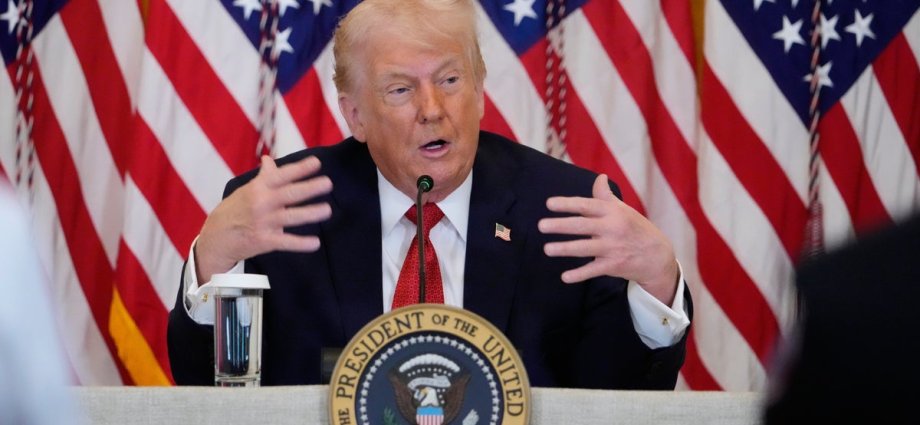
Donald Trump has threatened to escalate tariffs against the UK and other countries opposing US plans to acquire Greenland.
Mr Trump stated his desire to take over the island due to its strategic Arctic location and mineral wealth.
He warned the UK could face additional tariffs from next month if it maintains its opposition.
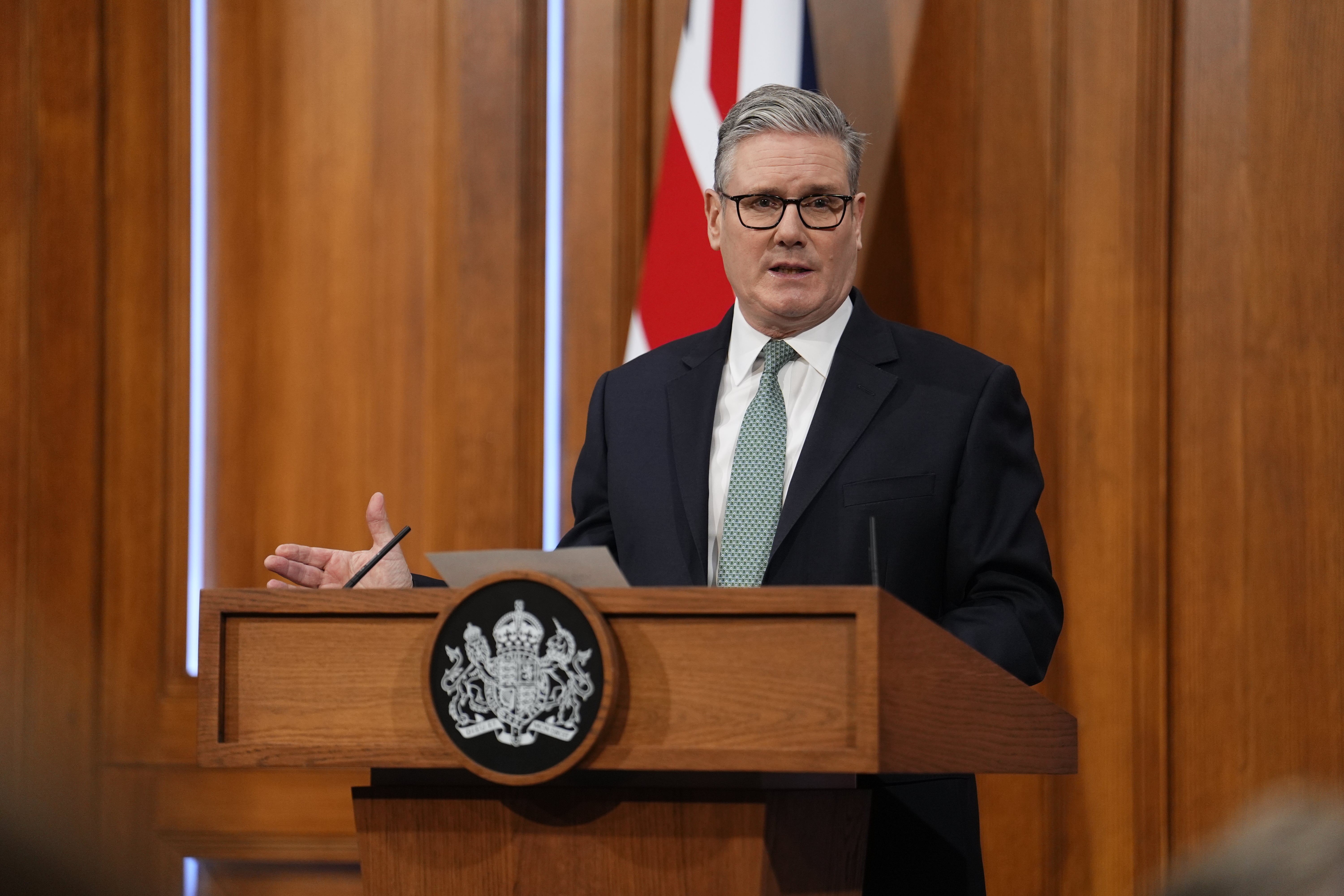
Sir Keir Starmer urged the US to avoid military action or a trade war, calling for the issue to be resolved through “calm discussion between allies.”
Here, we look at what Mr Trump’s tariff plans could mean for the UK:
– What are tariffs?
Tariffs are a tax on products imported into a country.
They are typically charged as a percentage of the price a buyer pays a foreign seller.
It means a US company buying a product from a UK supplier would now have to pay an additional amount, such as 10 per cent, to the state, on top of the original price.
– Who pays them?
The companies buying the imported goods pay the tariffs.
In this case, it means US firms will have to pay more for international goods from countries affected.
Mr Trump has used his tariff policies to encourage US firms to buy products manufactured within the country, and therefore avoid the additional tax.
– How are they charged?
Tariffs are collected by the national customs authority of the country into which the goods are being imported.
In the UK, this means any tariff is paid to His Majesty’s Revenue and Customs (HMRC) when goods enter the UK.

In the US, tariffs are collected by Customs and Border Protection agents at ports of entry across the country, such as airports and ports.
– How are tariffs calculated?
Companies can determine the tariff costs of a product by working out its 10-digit HTS code, which is an internationally recognised standard used for the categorisation of goods by customs officials.
Every product has a classified code based on the characteristics of the product, which is needed for to goods to be imported.
Duty and tariff rates are based on these and firms can face penalties if they mis-declare these or the goods.
Firms also have to declare that products originate in a particular country, with a certificate of origin.
– What are UK/US tariffs currently?
There is a significant range of tariff costs depending on products and sectors, and the UK and US governments made a number of agreements last year.
Nevertheless, broadly speaking, the US imposed a 10 per cent tariff on top of all previously existing tariffs and duties.
Last year’s 2025 economic prosperity deal secured tariff exemptions for UK steel, aluminium, aerospace and cars, although many of these only cover a certain quota of products.
– What is Mr Trump threatening?
Mr Trump said he would charge the UK a 10 per cent tariff “on any and all goods” sent to the US from February 1.
This would then increase to 25 per cent from June 1, until a deal is reached for Washington to purchase Greenland from Denmark.
He would impose this on Denmark and European allies opposed to his plans, who currently also include France, Germany, the Netherlands, Finland, Norway and Sweden.
It is not known how this will affect products which are currently exempt from tariffs.
– How would this impact the economy?
Countries such as the UK that have high exposure to the US could see their economic growth hit by the tariff plans.
Capital Economics’ chief economist Neil Shearing suggested the wider economic effect would be “modest” but it would “shave a few tenths of a percentage point off GDP in the affected economies”.
He added: “The countries most exposed are those with the largest export shares to the US – notably the UK and Germany.
“A 10 per cent tariff could reduce GDP in those economies by around 0.1 per cent, while a 25 per cent tariff could knock 0.2–0.3 per cent off output.”
Goldman Sachs economists Giovanni Pierdomenico and Sven Jari Stehn said the impact could be higher, indicating that the proposed 25 per cent tariff could affect countries’ GDP by between 0.25 and 0.5 per cent.
– Which sectors would most be affected?
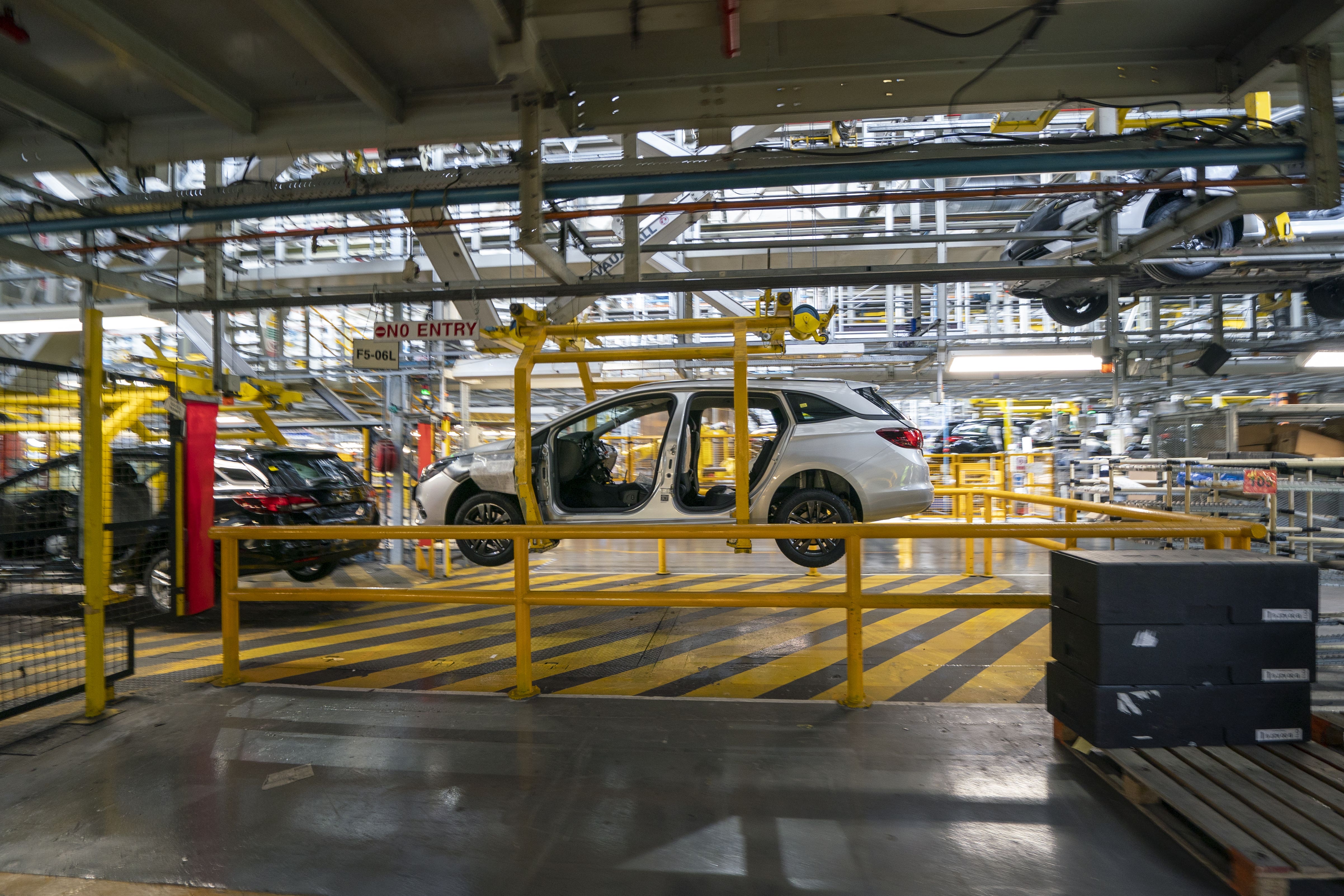
The biggest export from the UK to the US is machinery, such a cars, engines and turbines.
Some consumer sectors could also be particularly affected, such as Scotland’s whisky industry, which exported almost £1 billion worth of whisky to the US in 2024.
– What could it mean for inflation?
The introduction of tariffs is often inflationary for both countries affected by the measure.
Economists at Deutsche Bank suggested that the “renewed threat of trade war, however, could disrupt the UK’s swift disinflation process”, in which inflation dropped to 3.2 per cent in November last year.