










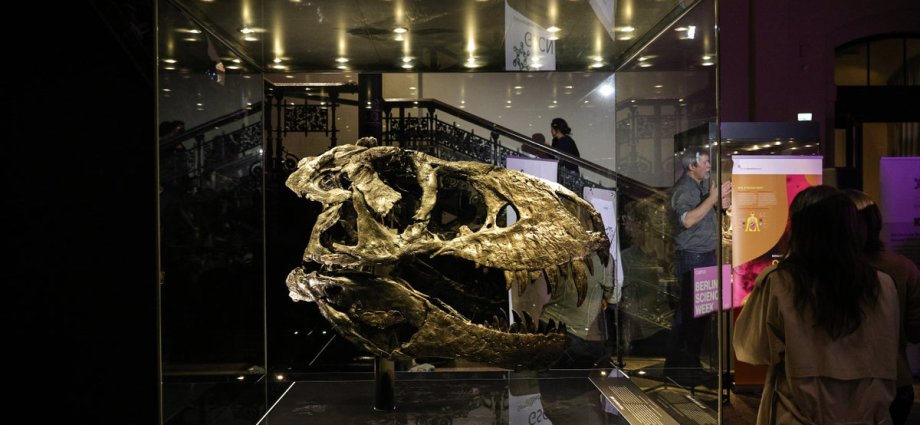
T rexes grew much more slowly than previously thought, taking several decades to reach their full size of around eight tonnes, a comprehensive new fossil study revealed.
Until now, researchers counted annual growth rings – similar to tree rings – inside fossil leg bones of dinosaurs to estimate how quickly they grew to adulthood and how old they were when they died.
Some of the best estimates from previous studies suggested that T rex typically stopped growing at around age 25.
Now, a new study of 17 tyrannosaur specimens, ranging from early juveniles to massive adults, has revealed that the king of carnivores took 40 years to reach their full size.
“This is the largest data set ever assembled for Tyrannosaurus rex,” said Holly Woodward, an author of the study published in the journal PeerJ.
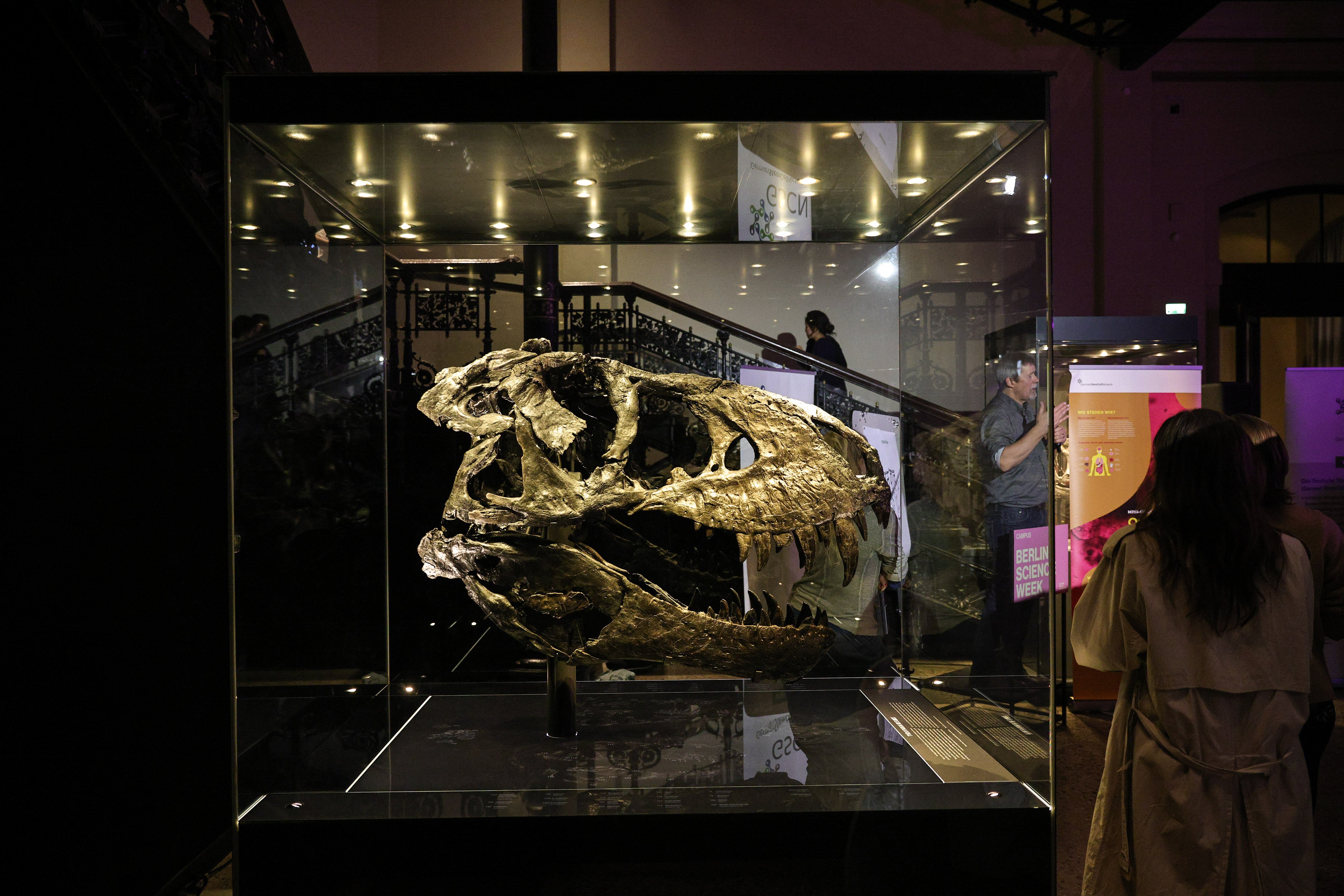
In the study, researchers assessed T rex bone slices under a special kind of light and used an advanced computer algorithm to count hidden growth rings not included in previous studies.
The results extend the growth phase of Tyrannosaurus by 15 years.
“Our results suggest that the Tyrannosaurus rex species complex grew more gradually and over a longer lifespan than indicated by prior models, with a protracted period of subadult development,” scientists wrote in the study.
The new approach stitched together growth records from different specimens to estimate the T rex growth trajectory across all stages of life in greater detail than in previous studies.
“Examining the growth rings preserved in the fossilised bones allowed us to reconstruct the animals’ year-by-year growth histories,” said Dr Woodward, a professor of anatomy at Oklahoma State University.
“The composite growth curve provides a much more realistic view of how Tyrannosaurus grew and how much they varied in size,” explained Nathan Myhrvold, another author of the study.
Such a long, four-decade growth curve may have allowed younger tyrannosaurs to fill a variety of ecological roles within their environments, scientists say.
“That could be one factor that allowed them to dominate the end of the Cretaceous Period as apex carnivores,” says Jack Horner, another author of the study from Chapman University in the US.
The latest study also reveals that many specimens previously identified as T rex may in fact be members of other tyrannosaur species.
Some recent studies hint that certain smaller specimens could be a small-bodied “Nanotyrannus” species, rather than juvenile specimens of Tyrannosaurus rex.
Even some of the large specimens are suspected to be two or three different species.
However, these theories are hotly debated by palaeontologists.
The latest study argues that methods typically used in bone growth studies may need to be revised.
“Our technique is so far the only objective algorithmic method for determining specimen relative age and for combining multiple individuals to produce a taxon-level growth curve,” researchers write in the study.