










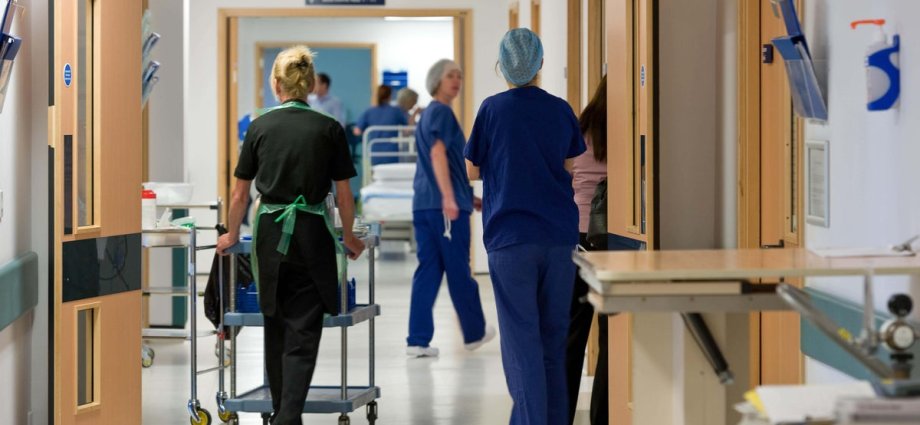
The number of people being admitted to hospital with norovirus has hit the highest level so far this winter with cases soaring by 57 per cent in a week.
NHS hospitals are facing a surge in cases, with some trusts declaring critical incidents – the highest alert level – and having to cancel operations due to A&E pressures as it battles a combination of flu, vomiting bugs and other winter viruses.
Data released on Thursday revealed 567 hospital beds were filled each day last week by patients with norovirus symptoms, up from the previous week’s average of 361 and the highest figure for norovirus patients so far this winter.
It comes as doctors warn that patients are being left languishing in waiting rooms and corridors for days on end in what is a “dreadful” week for the health service, with patients said to be waiting for up to two days for a bed.
Dr Vicky Price, president of the society for acute medicine, told The Independent that pressures showed an “awful picture nationwide.”
She said: “The thing that’s so hard is seeing patients waiting for days in a waiting room and on corridors. That has certainly rocketed. It’s almost seen as acceptable now.
“For the people sitting in waiting rooms, once they have exceeded 12 hours, there is no emphasis to move them [onto wards]. We regularly hear about trusts dismissing anything other than ambulance patients because it is so target-driven, not patient-driven. So, patients are sat in waiting rooms waiting for beds for days.”
At least seven trusts, including in Kent, Sussex and the Midlands, have declared critical incidents this week.
On Tuesday, Nottingham University Hospitals Foundation Trust declared a critical incident warning, adding: “Since Christmas, rising demand, winter infections, and staff sickness have led to significant and unacceptable delays in our Emergency Department (ED) and across our hospital wards.”
The trust said it had experienced its busiest day of the year so far on 7 January 2026 with 550 patients attending A&E.
It added: “Patients are having unacceptable and lengthy waits on corridors. Staff are working under extreme pressure.”
Meanwhile, monthly data on A&E waiting times, also published on Thursday, showed 151,724 patients, 10.5 per cent, waited more than 12 hours to be seen, treated, or admitted, after arriving at A&E in December. The percentage waiting 12 hours is the highest recorded this winter, but lower than in winter 2024 and 2023.
The number waiting at least four hours from the decision to admit to admission also rose, standing at 137,763 last month, up from 133,799 in November.
Some 73.8 per cent of patients in England were seen within four hours in A&Es last month, down from 74.2 per cent in November.
The government and NHS England have set a target of March 2026 for 78 per cent of patients attending A&E to be admitted, discharged, or transferred within four hours.
One emergency care doctor at a major hospital, speaking toThe Independent, described A&E of being “dreadful” this week. “We had a nice Christmas, then the cold snap afterwards made us very busy with many, many broken bones.
“And we’ve not recovered from that position.”
They added: “[This week] We were holding 50 plus people awaiting beds in the department on one night with 12 hours wait to be seen.”
But, as norovirus figures soar, the number of people in hospital with flu in England has fallen slightly.
An average of 2,725 flu patients were in the hospital each day during the week ending January 11, down 7 per cent from 2,924 the previous week.
The figure had climbed as high as 3,140 in the week ending December 14. Last winter, weekly flu numbers for England peaked at 5,408 patients.