










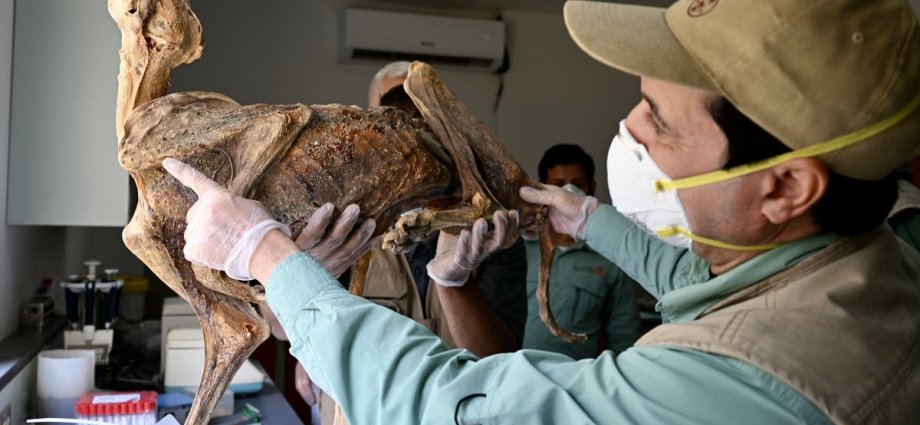
Scientists have unearthed a remarkable collection of mummified cheetah remains from caves in northern Saudi Arabia. The discovery includes seven mummies, alongside the bones of 54 other cheetahs, found at a site near the city of Arar.
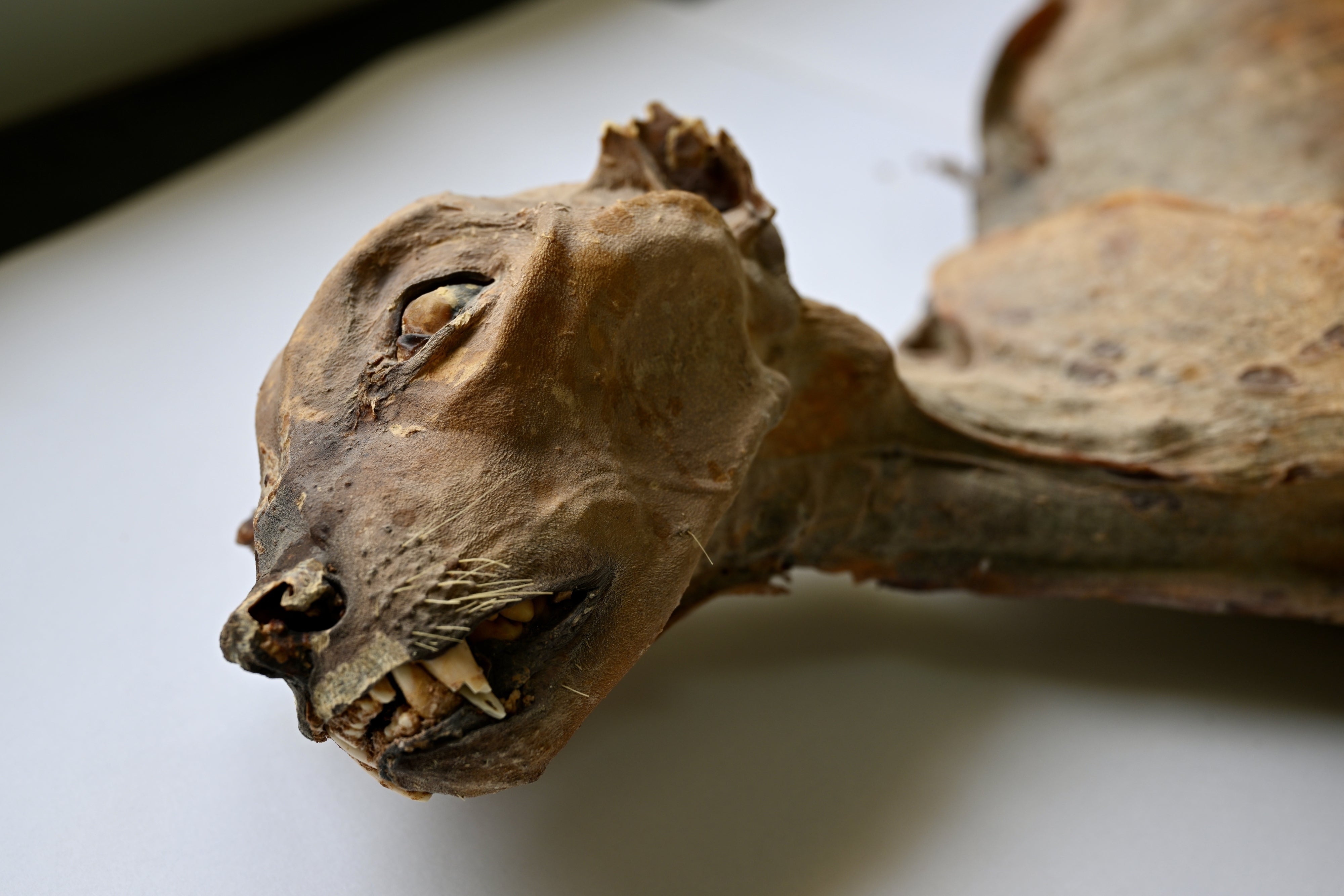
These ancient big cats date back between 130 and over 1,800 years. Mummification, a process preventing decay, can occur naturally in environments such as desert sands, though Egyptian mummies are more widely recognised. The newly discovered specimens exhibit cloudy eyes and shrivelled limbs, appearing as dried-out husks.
“It’s something that I’ve never seen before,” said Joan Madurell-Malapeira with the University of Florence in Italy, who was not involved with the discovery.
Researchers aren’t sure how exactly these new big cats got mummified, but the caves’ dry conditions and stable temperature could have played a role, according to the new study published Thursday in the journal Communications Earth and Environment.
They also don’t know why so many cheetahs were in the caves. It could have been a denning site where mothers birthed and raised their young.
Scientists have uncovered the rare mummified remains of other big cats, including a saber-toothed cat cub in Russia.
It’s uncommon for large mammals to be preserved to this degree. Besides being in the right environment, the carcasses also have to avoid becoming a snack for hungry scavengers like birds and hyenas.
Cheetahs once roamed across most of Africa and parts of Asia, but now live in just 9% of their previous range and haven’t been spotted across the Arabian Peninsula for decades. That’s likely due to habitat loss, unregulated hunting and lack of prey, among other factors.
In a first for naturally mummified big cats, scientists were also able to peek at the cheetahs’ genes and found that the remains were most similar to modern-day cheetahs from Asia and northwest Africa. That information could help with future efforts to reintroduce the big cats to places they no longer live.