




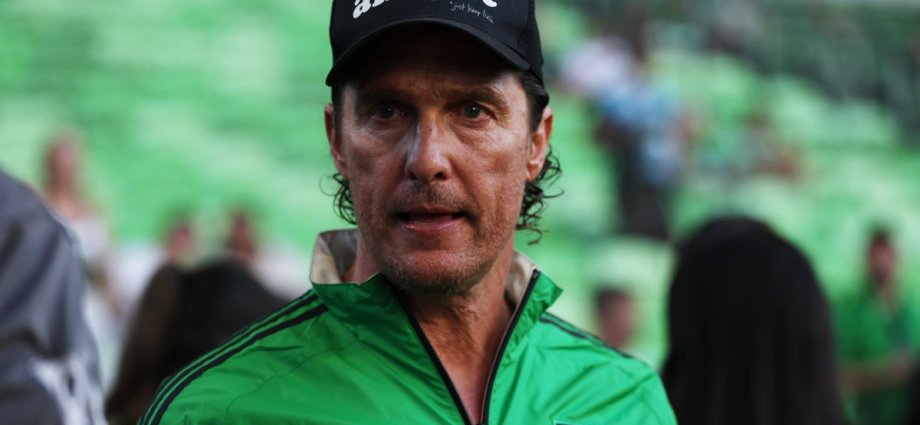
Matthew McConaughey has filed to trademark his signature catchphrase “alright, alright, alright” in a fight against artificial-intelligence deepfakes.
The actor, 56, recently secured eight trademarks to protect his likeness from unauthorized AI misuse, including his voice, his smile, and the famous phrase, which he first improvised in Richard Linklater’s 1993 comedy Dazed and Confused.
“The mark consists of a man saying ‘ALRIGHT ALRIGHT ALRIGHT,’ wherein the first syllable of the first two words is at a lower pitch than the second syllable, and the first syllable of the last word is at a higher pitch than the second syllable,” the trademark registration stated, according to Variety.
Attorneys for the entertainment law firm Yorn Levine, representing McConaughey, applied for the protection in December 2023, but the U.S. Patent and Trademark Office approved the trademark in December 2025.
The eight trademarks approved over the last few months included several pieces of audio, including a clip of the Oscar winner saying, “Just keep livin’, right? I mean, what are we gonna do?” Other trademarks included a three-second clip of him sitting in front of a Christmas tree and a seven-second video of him standing on a porch.
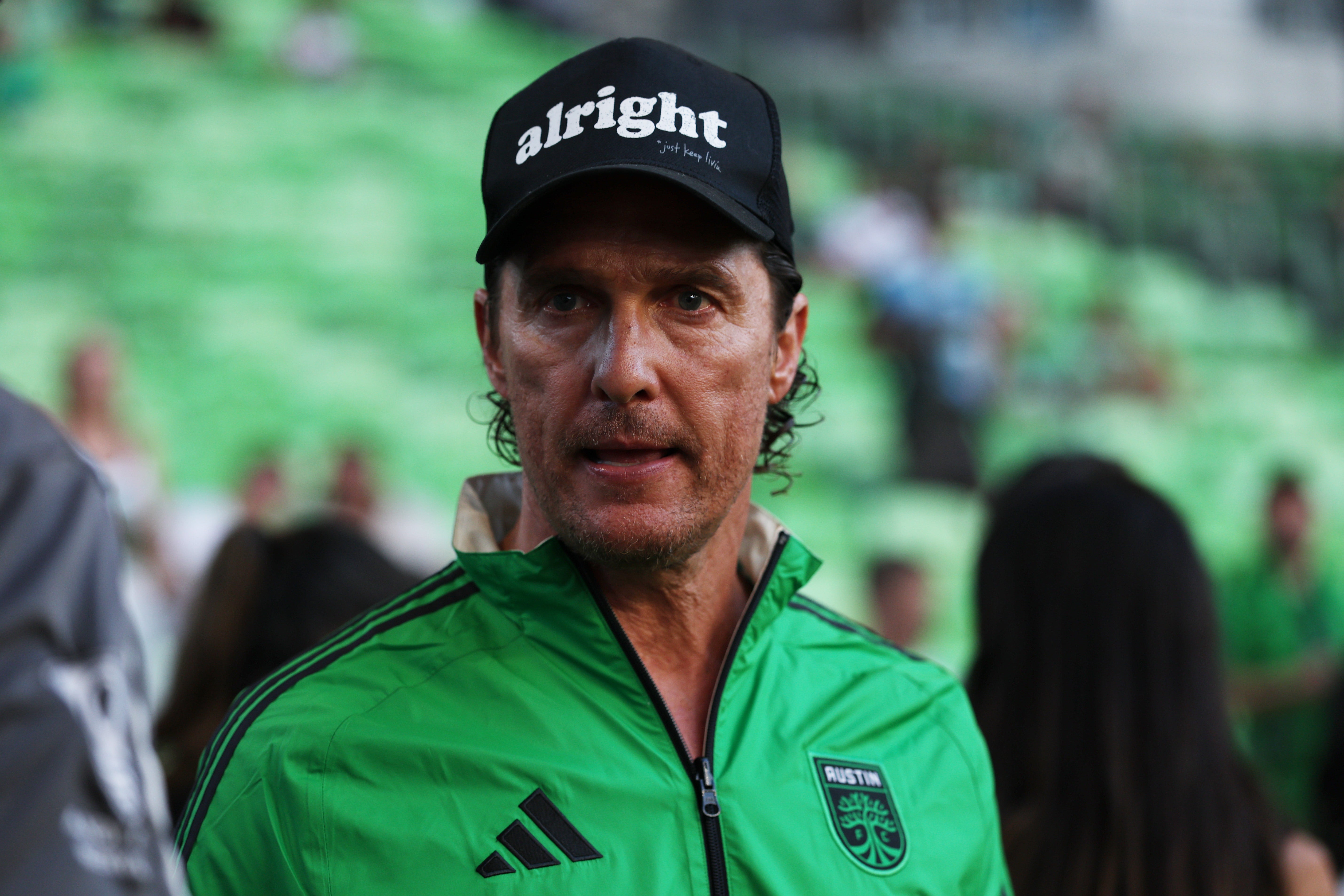

While state consumer protection laws already protect celebrities from having their likeness replicated to sell products, McConaughey’s trademark strategy means that the Interstellar actor will now have grounds to sue in federal court over general “misuse” on the internet, even if misleading AI videos using his image are not explicitly selling anything.
Yorn Levine founder and lawyer Kevin Yorn said in a statement shared with The Independent: “We embrace AI, invest in it, and actively support its evolution. Progress, however, should have boundaries. Protecting individual voice, image, and intellectual property is essential to building a future that works for everyone. Along with Matthew, we are forward-looking, engaged in the possibilities of AI, and thoughtful about how everyone’s creative identity is represented and protected.”
McConaughey told the Wall Street Journal: “My team and I want to know that when my voice or likeness is ever used, it’s because I approved and signed off on it. We want to create a clear perimeter around ownership with consent and attribution the norm in an AI world.”
The actor previously signed off on AI replicating his voice for the sake of his newsletter, Lyrics of Livin’. In November, he partnered with AI audio company ElevenLabs to create a synthetic version of his voice to read out a Spanish-language audio version of his weekly newsletter.
Watch Apple TV+ free for 7 day
New subscribers only. £9.99/mo. after free trial. Plan auto-renews until cancelled.
ADVERTISEMENT. If you sign up to this service we will earn commission. This revenue helps to fund journalism across The Independent.
Celebrities like McConaughey are not the only ones seeking to limit AI misuse. As AI like Elon Musk’s in-house tool Grok is being used to create sexually explicit images without people’s consent, politicians, including Alexandria Ocasio-Cortez, are working to pass legislation to ban the deepfakes.