










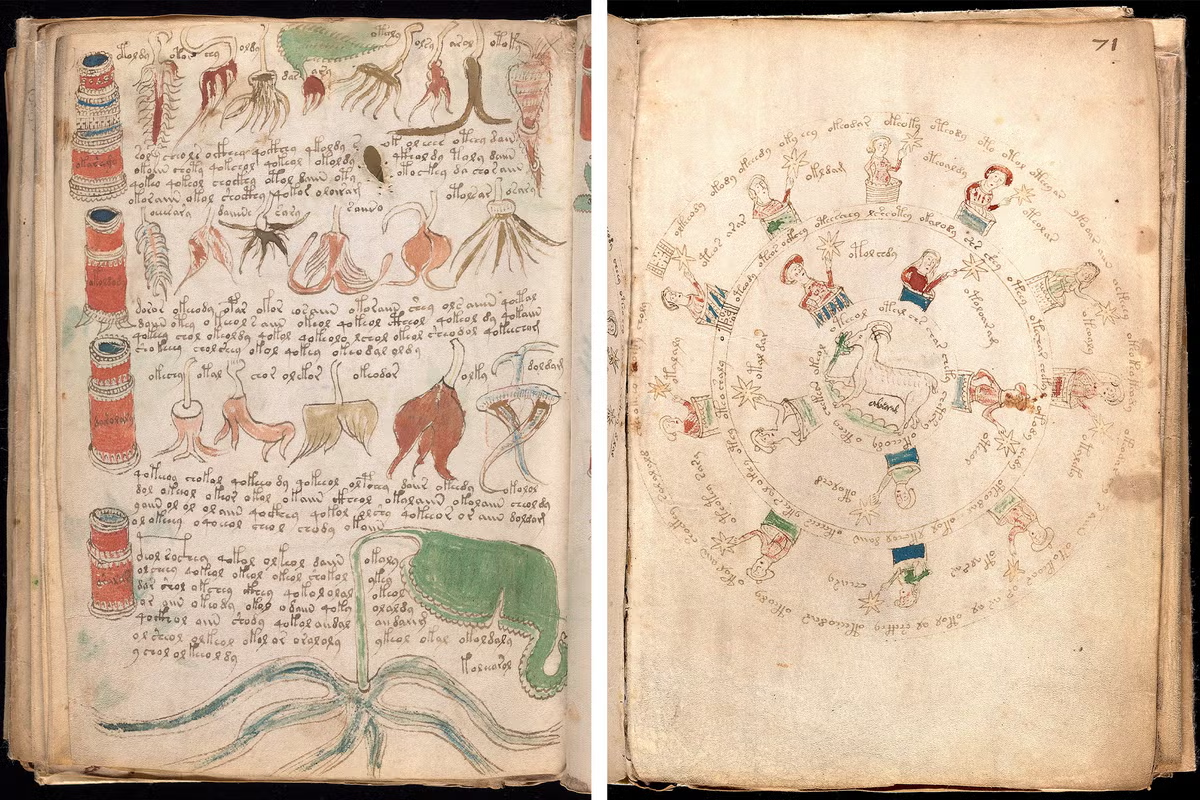
One of history’s most mysterious texts could be a type of encrypted message created in the 1400s, a new study suggests.
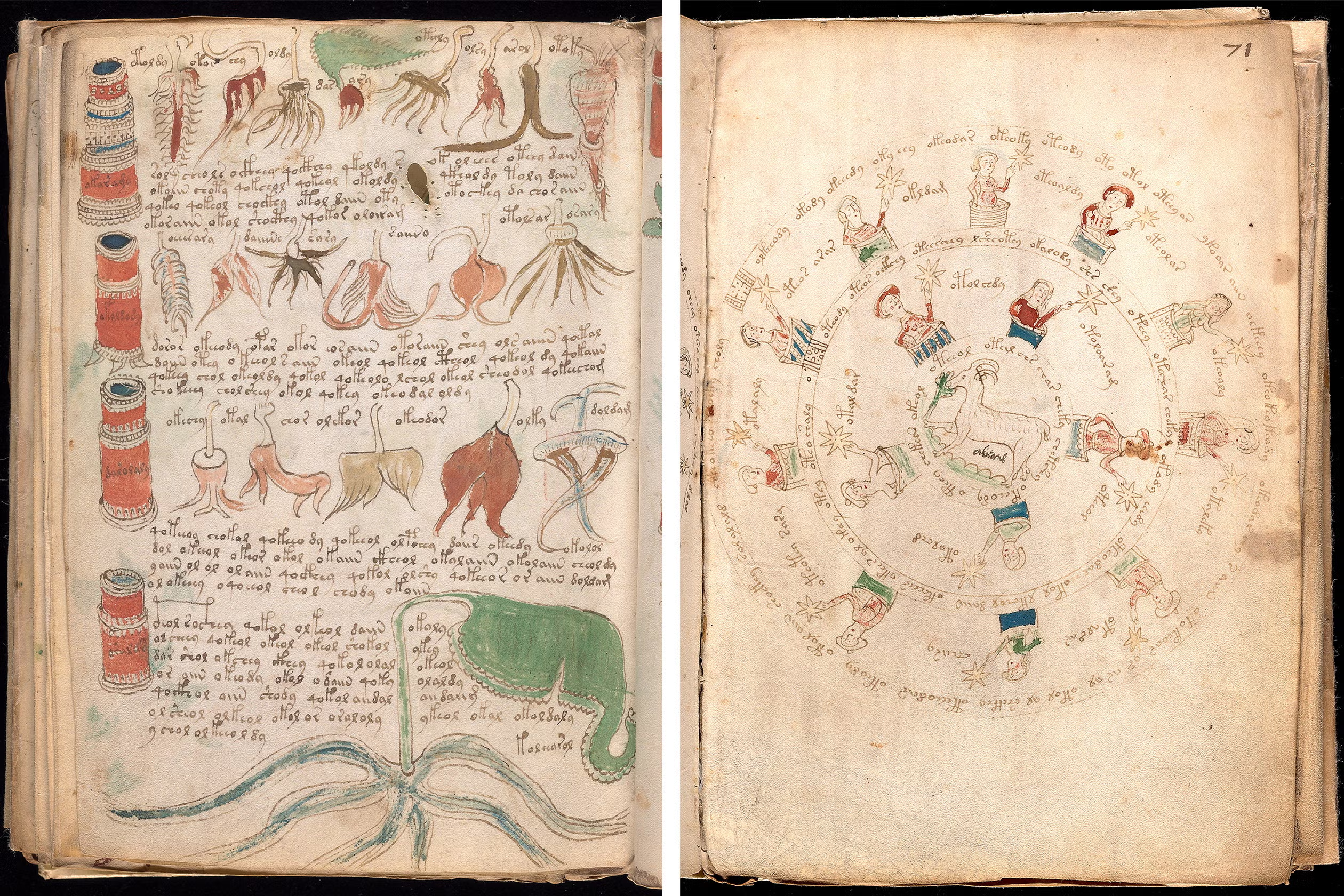
The Voynich manuscript is a 23.5 x 16.2cm book of about 240 pages, written in an unknown script sometime in the 1400s. The book contains strange scientific and botanical drawings in various shades of green, brown, yellow, blue, and red.
Some experts think it contains meaningless gibberish, while others think it encodes a real language.
Now, a new study suggests it could be a type of ciphertext – the enciphered form of a text or of its elements – written in the early 1400s by encrypting information in a specific manner.
The study’s sole author, science journalist Michael Greshko from Washington DC, tested the hypothesis that the Voynich Manuscript could be encrypted text by producing writing that looks similar to the mysterious historical text.
He created a completely new encryption called the “Naibbe cipher”, whose output looks very similar to the Voynich Manuscript text.
The Naibbe cipher was developed to be historically plausible for scribes of the 1400s to use for encrypting Latin or Italian .
It is a homophonic substitution cypher that could be done entirely by hand using 15th-century materials, and encrypts a wide range of Latin and Italian plaintexts, according to the study published in the journal Cryptologia.
“The resulting ciphertexts remain fully decipherable and also reliably reproduce many key statistical properties of the Voynich Manuscript at once,” Greshko wrote.
The Naibbe cipher maps letters onto multiple distinct Voynich-style characters, changes depending on context.
It produces words by following specific rules, like words have slots where certain glyphs tend to appear.
Some symbols also tend to occur more often than others.
For instance, some strings of characters appear only at the start, a few mostly appear in the middle, and others tend to appear at the end.
The study found that following these rules produced fake Voynich words that follow the same structural rules.
Since these language-like “rules” appear to create fake Voynich words, the study suggests the Voynich manuscript also encrypts real words and not gibberish.
The findings bolster previous claims that the Voynich manuscript could be a type of ciphertext.
Scientists hope further computer analyses of both the Voynich manuscript and other mimic cyphers can help unravel the six-century-old mystery.