









Detective Inspector Lynley and his trusty lieutenant, DS Havers, are back. Seventeen years after The Inspector Lynley Mysteries slunk off our screens, following six series as a fixture on BBC One, the corporation has decided to reboot the franchise. But will this new drama – pithily titled Lynley – be a hard-hitting reimagining, or a more faithful resurrection of the Monday night staple?
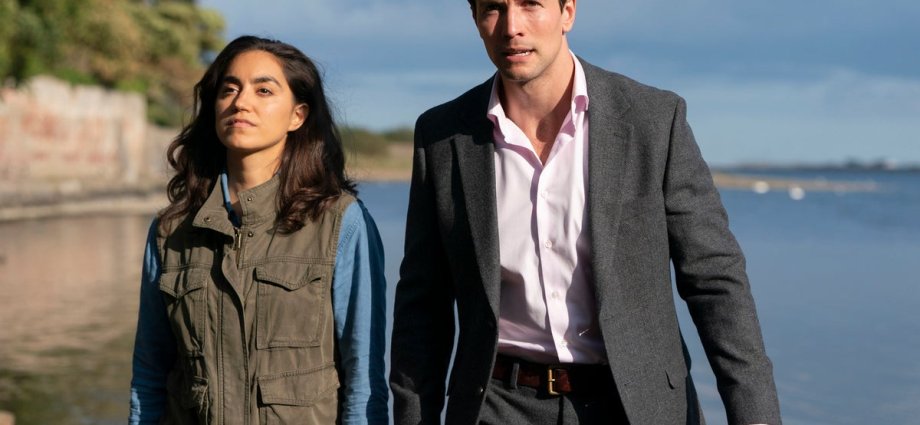
On a final warning for repeated insubordination, DS Barbara Havers (Sofia Barclay) is assigned to the new DI up from the big smoke. Tommy Lynley (Leo Suter), it turns out, isn’t quite like the rest of the team in this rural, East Anglian backwater: he’s an Oxford law graduate and the heir to an earldom, who drives a vintage Jensen Interceptor. “What is a bloke like you doing in a job like this?” Havers asks him on their first day. That’s the twist with Lynley. Where aristocratic status opened doors for Peter Wimsey and Albert Campion, Lynley is the victim of reverse snobbery, his attitude and motivation repeatedly questioned in spite of his work ethic and commitment. After all, he might carry himself like “Beau Brummell” (as one colleague, au fait with the Regency era trendsetter, puts it) but – dammit! – he gets results.
The balance of Lynley, and its predecessor The Inspector Lynley Mysteries, is the pairing of this reticent, buttoned-up do-gooder with a spiky working-class sidekick. In the title role, Suter is convincingly toffish (having been educated at St Paul’s, the top-ranked private school in the country). He looks like he’s carved from granite and learned acting at the foot of the Grampians, mirroring their unflinching, emotionless style. Barclay (educated at Westminster, another top 10 private school) is likeable, but, unsurprisingly, the chippiness feels unconvincing. It’s symptomatic of the general quality of acting from the ensemble cast, which feels rushed and wooden. Perhaps British murder serials – so often a first step on the ladder for up-and-coming actors – don’t have the pulling power of old.
Or perhaps the cast are inhibited by Steve Thompson’s clunky scripts, where characters bark cliches (“We need a result,” roars Daniel Mays’s DCI Nies, “and quickly!”) or trip their way through a tangle of exposition. Reverting to a more traditional format – 90-minute standalone episodes, rather than a longer arc over the series – means there’s a lot of plot to get through in an episode. The ambition is not high: these films are more in the mould of an episode of Inspector Morse or A Touch of Frost than golden age mysteries, or gritty serials like Broadchurch or True Detective. At most, they will appeal to viewers who are satisfied with a fix of so-called “cosy crime” – albeit without much of that genre’s trademark humour and pep.
It feels cruel, having lamented the inexorable rise of detective dramas that plumb the depths of human despair, to be so underwhelmed by a determinedly old-school offering like Lynley. “Don’t you ever just go with your gut?” Havers asks the DI. “No, and nor should anyone.” This is a world in which cases are cracked while the Interceptor bombs through the broads, or over a pint of bitter down the local. Lynley and Havers talk the solution through and then burst in on the baddie in the nick of time, any interpersonal conflict getting neatly wrapped up in the process. There would be something reassuring about this throwback, if it were better executed. Instead, the eye is drawn constantly to the limitations: the performances, the writing, the convoluted mysteries.
Perhaps Lynley exists mainly as an export property for the BBC. After all, the original books, on which the characters are based, were written by Elizabeth George, a novelist from Ohio. Lynley and Havers exist as cartoon Brits in Constable country, an ersatz vision of our nation which appeals more to Anglophiles than the English. That would offer some explanation – if not exoneration – for a show made with so little apparent care.