








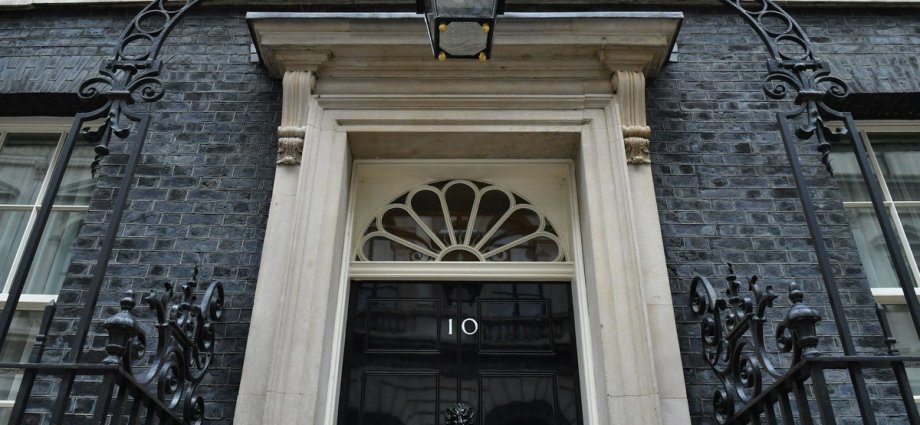
Plans were drawn up under Tony Blair for a major redevelopment of Downing Street costing hundreds of millions of pounds, including plans for an underground “safe-haven” to be used in the event of a terrorist attack, according newly-released official files.
The hugely ambitious programme – codenamed Project George – included plans for a two-storey “subterranean suite” under the No 10 garden, with a conference room capable of seating 200 people, which could also serve as a bunker in the event of a terrorist attack.
According to a briefing pack, released to the National Archives at Kew, west London, there would even have been a new underground service road so VIP visitors would no longer have to share the famous No 10 black door entrance with deliveries and refuse collections.

A separate new entrance would have been built for staff and “general visitors”, with the construction of a cafe and “break out space” within an atrium off the No 10 courtyard and “recreation facilities” in the basement.
The plans extended to Nos 11 and 12 Downing Street and 70 Whitehall – the home of the Cabinet Office – which would have been given a new glass-fronted extension with solar screening, to prevent the build-up of excessive heat, and blast-resistant glazing.
The proposals were intended to address the dilapidated condition of the estate – which dated back to the 17th century – which had not undergone a major refurbishment since the 1960s, with the sewers, mains power and IT systems all regularly breaking down.
“The main driver for this project is the serious deficiencies which constrain the full and effective use of the buildings,” the briefing pack said.
“These cause increased incidences of unacceptable failure of critical services unfitting for such important a vital office of government.”
It would have required the buildings – which included the offices of the hundreds of civil servants as well as the official residences of the prime minister and chancellor – to be vacated for two years while the construction work was carried out.
It would have been paid for through the private finance initiative (PFI) with the costs spread over 30 years, peaking at £63 million in 2006/07 before falling back to £25.5 million a year for the remainder of the period.
It is not clear from the files why the government did not proceed with the plan – although cost may well have been an issue.
The briefing pack was dated March 2005, just two months before the general election which returned Labour to power for a third successive term, when Mr Blair’s attention would have been focused on other matters.