










Palestine Action hunger strikers have initiated legal proceedings against the government as they accuse it of abandoning its own prison safety policy framework.
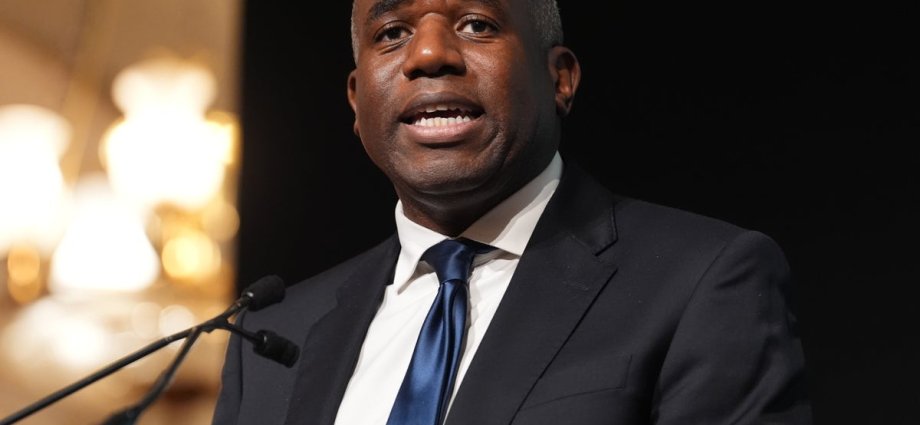
A legal firm representing the activists has submitted a pre-action letter to Justice Secretary David Lammy as several imprisoned members, including one who has refused food for 51 days, have been hospitalised due to rapidly deteriorating health.
The letter, dispatched on Monday, outlines the group’s intention to pursue legal action, citing the government’s alleged abandonment of its own prison safety policy framework.
Strikers claim they have sent multiple letters to Mr Lammy, who also serves as deputy prime minister, but have received no response.
Seen by the Press Association, the urgent communication demands a response within 24 hours, stressing that the issue is a “matter of urgency” as “our clients’ health continues to deteriorate, such that the risk of their dying increases every day.”
It further requests “an urgent meeting with the proposed defendant to discuss the deterioration of our clients’ health and to discuss attempts to resolve the situation.”

Since the hunger strike commenced on 2 November, seven prisoners have been admitted to hospital. Among them are Amu Gib, 30, held at HMP Bronzefield in Surrey, and Kamran Ahmed, 28, from Pentonville Prison in London.
Two people have had to end their hunger strikes due to health conditions. Jon Cink, 25, ended his on day 41, while Umer Khalid, 22, ended theirs on day 13.
Gib, now on day 51 of their strike, was hospitalised on Saturday and reportedly requires a wheelchair due to their rapidly declining condition. Ahmed is currently on day 43 of his strike.
Last Thursday, emergency physician Dr James Smith warned journalists that some of the activists “are dying” and require specialist medical intervention.
Sending a letter with the signatures of over 800 doctors, Dr Smith warned the strikers were at “very high risk of serious complications, including organ failure, irreversible neurological damage, cardiac arrhythmias, and death.”

The prisoners face charges related to alleged break-ins or criminal damage carried out on behalf of Palestine Action, prior to the group being banned under terrorism legislation.
Gib is accused of breaking into RAF Brize Norton and spray-painting two RAF Voyager planes. Ahmed faces charges of causing £1 million of damage with sledgehammers at the UK site of an Israel-based defence firm near Patchway, Bristol, in August 2024.
The strikers’ demands include the de-proscription of ‘Palestine Action’ as a terrorist group and for the ban to be lifted and the shutting down of defence firms linked to Israel. They also called for the immediate bail for their prisoners, the right to a fair trial, and for the protection of freedom of expression while in prison as the allege letters have gone missing and phone calls have been blocked.
A Ministry of Justice spokesperson said: “We strongly refute these claims. We want these prisoners to accept support and get better, and we will not create perverse incentives that would encourage more people to put themselves at risk through hunger strikes.”
Prime minister Sir Keir Starmer previously affirmed that “rules and procedures” are being followed, while Prisons minister Lord Timpson has maintained that the service is “very experienced” in handling hunger strikes, possessing “robust and working” systems.
Lord Timpson added that the Prison Service “will not be meeting” any prisoners or their representatives.