










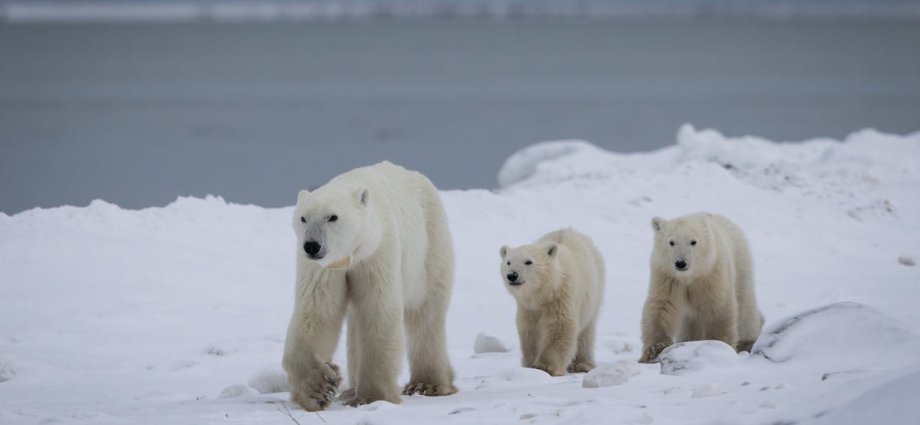
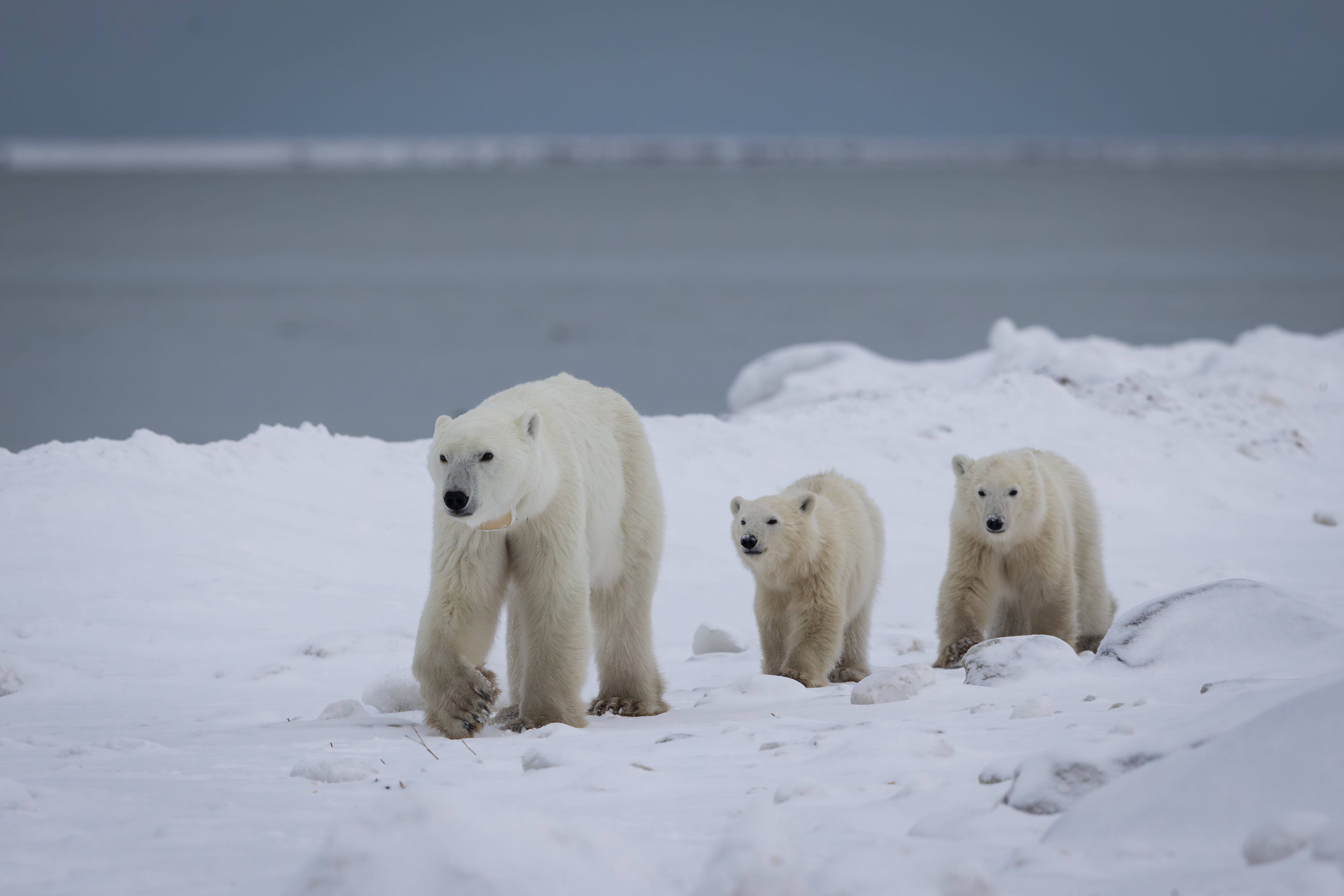
A mother polar bear has made the decision to adopt – a move that scientists say is extremely rare – and the new family was caught on video.
Researchers had tagged the five-year-old mother, also known as “bear X33991,” and her 10-to-11-month-old cub in the spring in the northeastern Canadian province of Manitoba. Come fall, the scientists noticed she had another untagged cub with her as her family grew, this time by seeming “adoption.”
This discovery, which was captured on video, marks only the 13th such case seen in the 4,600 bears that have been tracked over the last 45 years in the Western Hudson Bay polar bear population.
“It is unusual,” said Alyssa McCall, a staff scientist at Polar Bears International.
“We don’t really know why it happens or how often – but we know it doesn’t happen often at all.”
However, adoption is not limited to polar bears in Canada. It’s also been seen in Norway and the High Arctic, Dr. Evan Richardson, a polar bear research scientist at Environment and Climate Change Canada, said.
“We’ve seen females take on whole litters of cubs, two or three cubs that aren’t even their own,” he noted.
Although some orphaned cubs have been adopted, adoptions has also been seen with cubs whose biological mothers were still alive, as well. But, why that happens isn’t fully known.
“We really think it’s just because they’re so maternally charged and such good mothers. They just can’t leave a cub crying on the tundra so they pick them up and take them along with them.” Richardson said.

For “bear X33991” and her new cub, what exactly happened to the birth bear remains a mystery. Even after the researchers analyze genetic samples taken from the cub, McCall said they may never know what happened to its biological mother.
“There’s a small chance we could find out, but there’s a good chance we’ll never know,” she explained.
Still, adoption is a good thing for this cub’s future. Adoption helps to increase the cub’s chance of survival to adulthood, and three out of the 13 adoption cases have survived in this population of polar bears.
That might not seem like a lot, but the survival rate for any polar bear cub to adulthood is around 50 percent, with a mother helping to teach the cub to hunt and survive for approximately 2.5 years.
Without a mother, the little cubs have almost no chance.

Polar bears across the world – young and old – are being increasingly threatened by human-caused climate change, too. Climate change is shrinking the ice the bears live on as temperatures rise, making it harder to hunt and live.
It’s even forcing changes in polar bear DNA, according to a recent study.
More than two-thirds of polar bears are predicted to be extinct by the year 2050, researchers at the U.K.-based University of East Angila said.
With these threats already impacting the region, Richardson said adoption is a good thing for bears around Churchill, where they discovered the cub.
“It’s just nice to know that the bears are looking out for each other,” he said.