










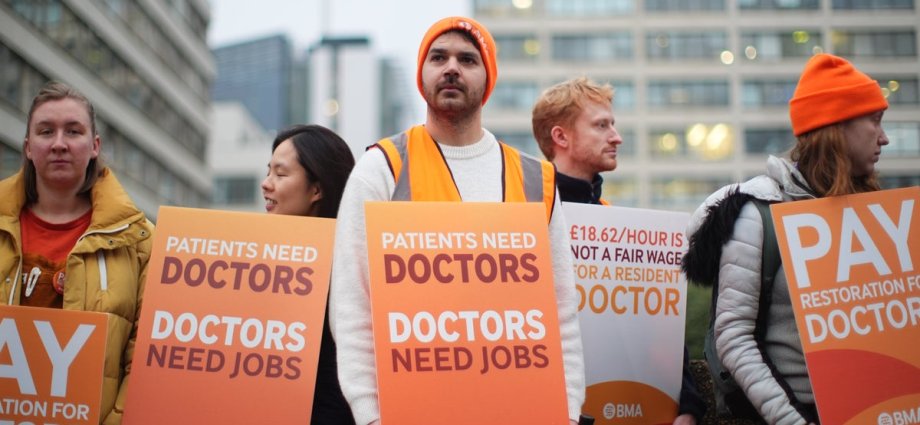
Resident doctors in England have started their five-day walkout after rejecting the government’s most recent offer to settle the long-running dispute.
It comes amid warnings of a “superflu” sweeping the nation, with flu cases in hospitals in England at a record level for this time of year and ministers accusing the British Medical Association (BMA) of staging the strike at a time that would “inflict as much damage as they can” on the NHS.
Hopes that the walkout could be averted at the last minute were dashed on Monday when members of the BMA rejected a fresh offer from the government.
While the union met with health secretary Wes Streeting the following day in a last-ditch attempt to avert the strike, they failed to come to an agreement.
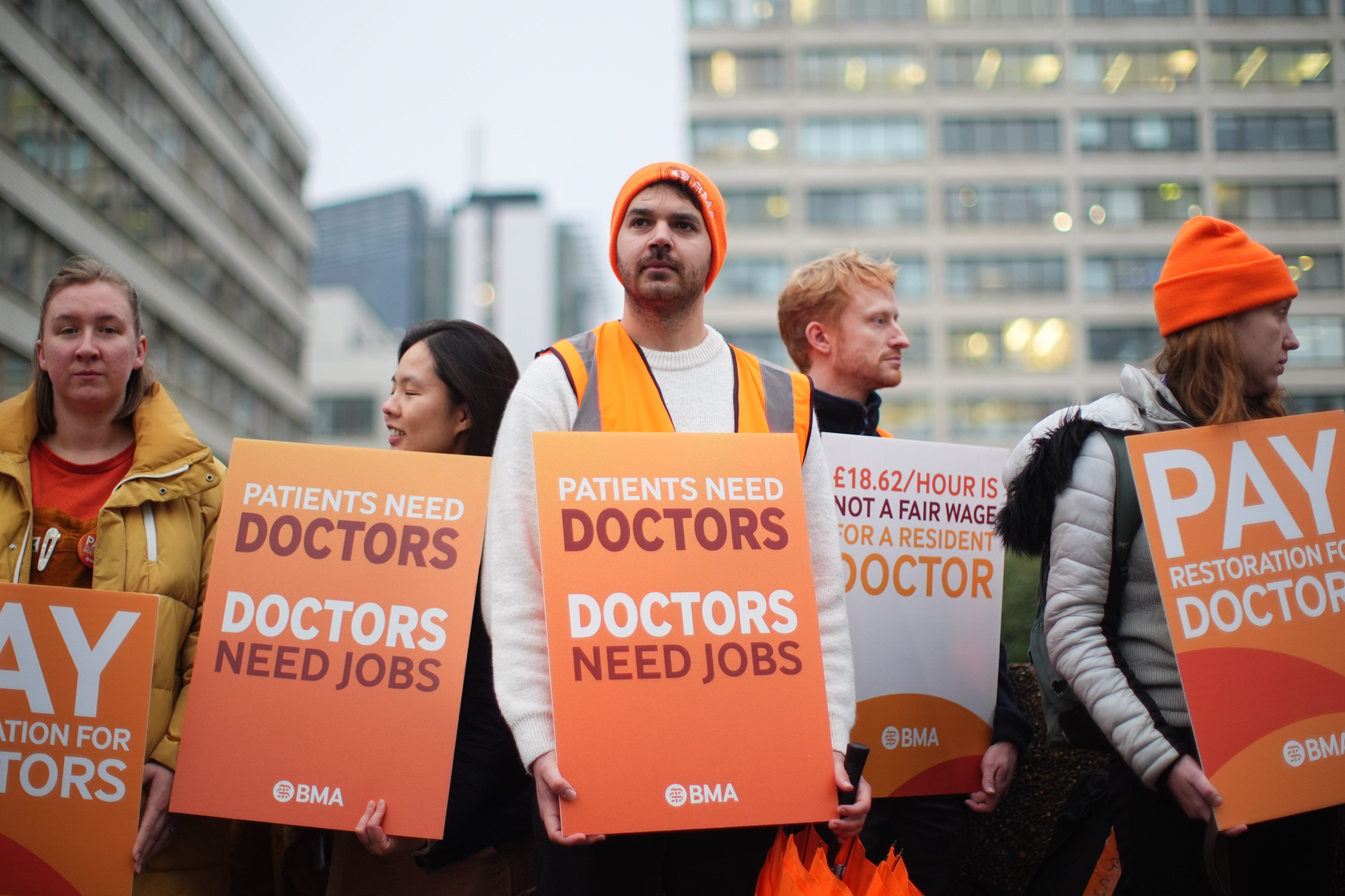
Hospitals have been told to aim to deliver 95 per cent of usual activity, but health leaders have conceded this could be “more challenging due to the onset of winter pressures and rising flu”, warning that more patients are “likely to feel the impact” of the strike action.
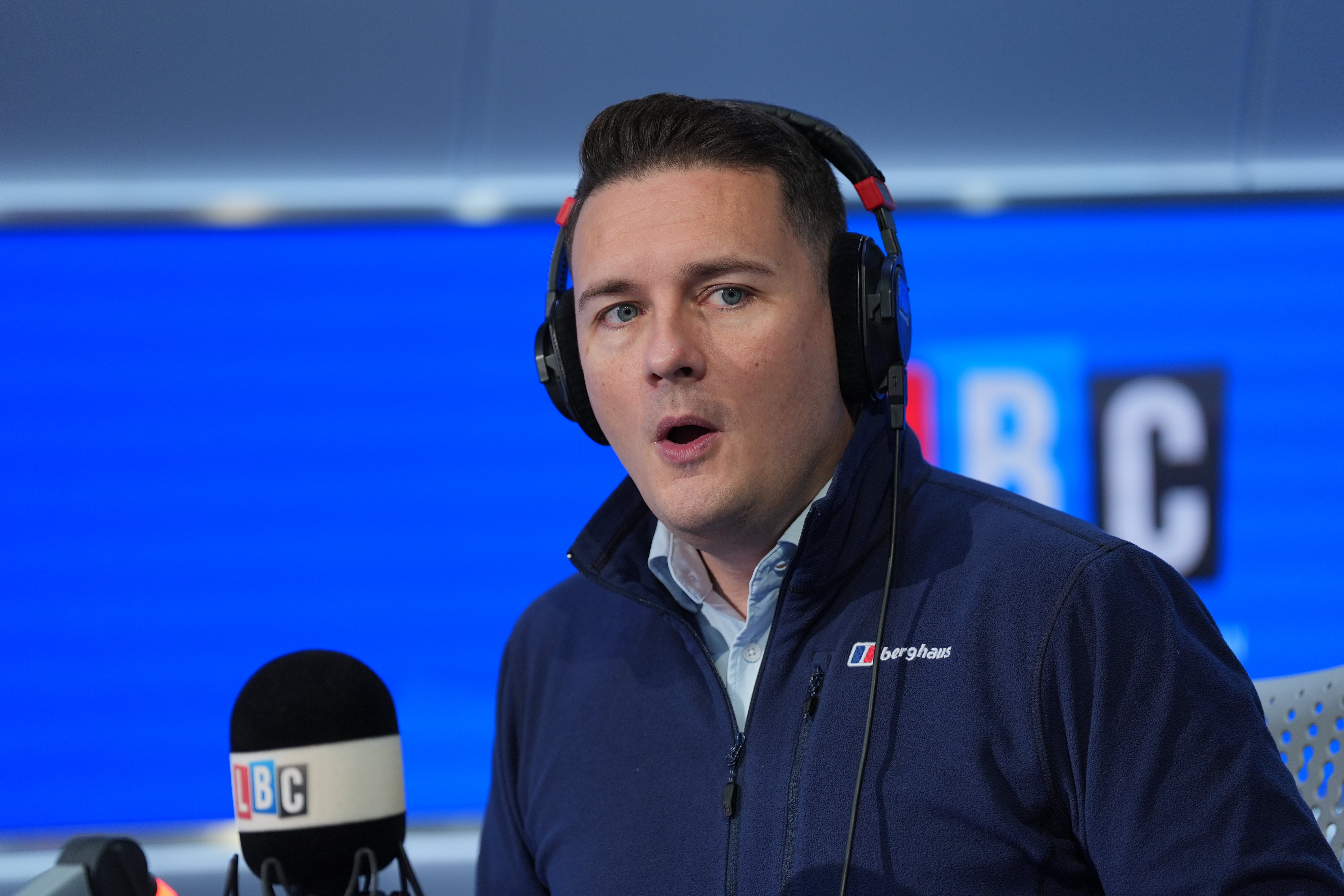
It comes after Mr Streeting over the weekend expressed his “genuine fears” for the NHS, warning that he could not guarantee the safety of patients during a severe rise in flu cases.
The health secretary claimed flu is causing “probably the worst pressure the NHS has faced since Covid”, with the collapse of the health service at “one minute to midnight”.
However, BMA chief Dr Tom Dolphin told The Independent the NHS is facing a “year-round” crisis that is not isolated to the winter, insisting that senior doctors would be able to be drafted in to cover for the absent resident doctors to keep patients safe.
Health bosses have urged patients to come forward as usual but warned that some appointments will “inevitably” need to be rescheduled.
NHS England also urged eligible people to get their flu vaccine to help ward off cases.
Professor Meghana Pandit, NHS England’s national medical director, said: “These strikes come at an immensely challenging time for the NHS, with record numbers of patients in hospital with flu for this time of year.
“Staff will come together as they always do, going above and beyond to provide safe care for patients and limit disruption, but sadly more patients are likely to feel the impact of this round of strikes than in the previous two – and staff who are covering will not get the Christmas break they deserve with their families.
“It is vital that the public continue to come forward for their appointments over the next few days unless they are contacted by the NHS and told otherwise – but inevitably some appointments will have to be rescheduled.
“It’s really important the public play their part by coming forward for care in the usual way – by dialling 999 in an emergency and otherwise using 111 online, your local pharmacist or GP.”
NHS England said that during the walkout, fewer doctors will be working compared to usual, so people with non-urgent concerns may need to wait longer as urgent cases are prioritised.
The five-day strike, which starts at 7am on Wednesday, will be the 14th by resident doctors since 2023.
Meanwhile, NHS leaders issued an “urgent plea” for people to get vaccinated against flu.
Duncan Burton, chief nursing officer for England, said: “The last thing anyone wants is for them or their loved ones to be unwell or hospitalised over the festive season, so if you don’t want your new year ruined – this is your last chance to get vaccinated in time.
“This is an urgent plea from the NHS – please come forward for your flu jab now and get protected.”
In a statement as the strike was set to begin, Dr Jack Fletcher, chair of the resident doctors committee at the BMA, said the latest walk-out was the result of “hurried, last-minute offers” from the government.
He said: “It is well past the time for ministers to come up with a genuinely long-term plan. If they can simply provide a clear route to responsibly raise pay over a number of years, and enough genuinely new jobs instead of recycled ones, then there need not be any more strikes for the remainder of this government.
“These strikes are the consequence of hurried, last-minute offers. This way of working is in no one’s interest. If we can sit down to come up with a considered, collaborative roadmap towards the restoration of the NHS workforce, then everyone can come out ahead.
“If the government keeps up the pattern of denial, harsh words and rushed half-measures, then we are going to be stuck in the cycle of strikes well into the new year.”