










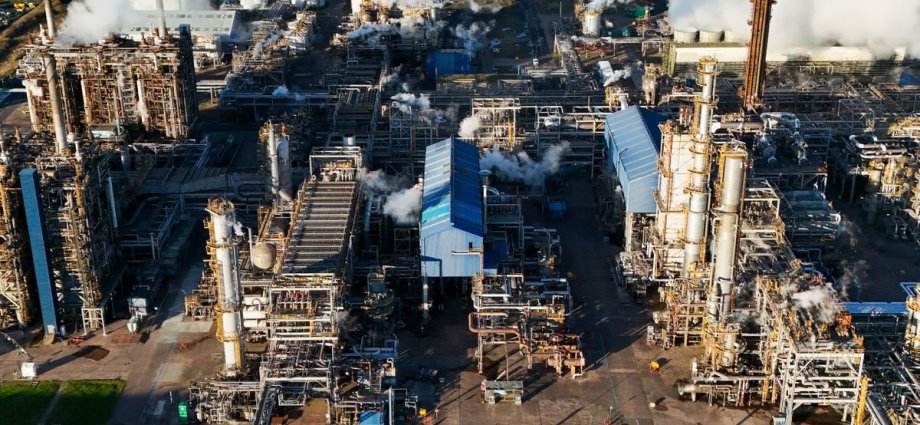
Efforts have been made to sell the Mossmorran plant which is due to close early next year but a “viable offer” has not been received, bosses have said.
The Fife Ethylene Plant will close in February, putting more than 400 jobs at risk in the area, with owners ExxonMobil claiming it is not economically viable due to, in part, UK Government policy.
Appearing before the Scottish Affairs Committee at Westminster on Wednesday, ExxonMobil UK chairman Paul Greenwood said there had been both “formal and informal” discussions about a potential sale of the site.
“We did not find anybody who is able to offer us a viable offer of taking it over,” he told MPs.
“Clearly, we would obviously sell the plant if we could, it’s clearly a much better option for everybody involved – including us – than shutting the plant down.
“We worked extremely hard.”
In the discussions the firm had with potential buyers, Mr Greenwood said, none saw the potential of continuing operations as an ethylene plant – which creates a key component in plastics.
“Nobody sees that as being economically viable,” he said.
“Therefore, we will shut this plant and we will do that in February.
“You then have a period, which could be up to about two years, to effectively demolish the site and return the land back to a kind of greenfield basis during all of that period.
“If there’s anybody who wishes to come and talk to us… around potential use of that site, potential ways in which they can take over ownership of that and do something, then we’re open to all of that.”
He added: “Clearly, we – along with everybody else – would like to see this site continue, would like to see it be valuable, would like to see it provide economic value to the community.”
Around 180 ExxonMobil staff face redundancy as a result of the decision, with 250 contractors also at risk.
Of the firm’s own staff, about 110 people will face redundancy next spring with the remainder continuing their employment to work on what is expected to be the demolition of the current site.
Mr Greenwood appeared after Bob MacGregor, the industrial officer for the Unite trade union, questioned the contentions of the company that it was not economically viable.
Mr MacGregor pointed to a £120 million UK Government investment announced on Wednesday for an ethylene plant in Grangemouth as proof of viability.
He pushed for the closure of the plant to be paused to allow for a buyer to be found.
The union official also criticised both governments, claiming they have not supported workers on the site enough.
The Scottish Government, he said, has attempted to organise events as part of its partnership action for continuing employment (Pace) scheme, which aims to help those facing redundancy.
“Other than that, I don’t see any support that’s been offered by either government,” he said.
“I can see a lot of kind words and soundbites, but I don’t see any real, tangible evidence of any practical support, financial support.”
Governments should be stepping in to offer retraining to workers in the hopes of securing work elsewhere, he said.
Speaking on BBC Radio Scotland on Wednesday, Scottish Secretary Douglas Alexander said the closure of the plant is “a great regret to me”.
He added: “I sat with the Mossmorran leadership with an open heart and an open mind to see if there was a way forward.
“Despite repeated contact with the British Government, they weren’t able to come forward with proposals.”
Scottish Deputy First Minister Kate Forbes said: “Our priority is to secure a sustainable future for the site at Mossmorran and workers at the plant.
“After being informed of ExxonMobil’s decision to market its plant on November 11, we activated our Pace initiative to provide workers with skills development and employability support.
“Since learning about the announcement, my officials and Scottish Enterprise have been working to secure new opportunities for the Fife Ethylene Plant and its workforce.
“However, the UK Government holds the levers for an industrial intervention as we have seen in England and Wales and the ability to address high energy costs.”