










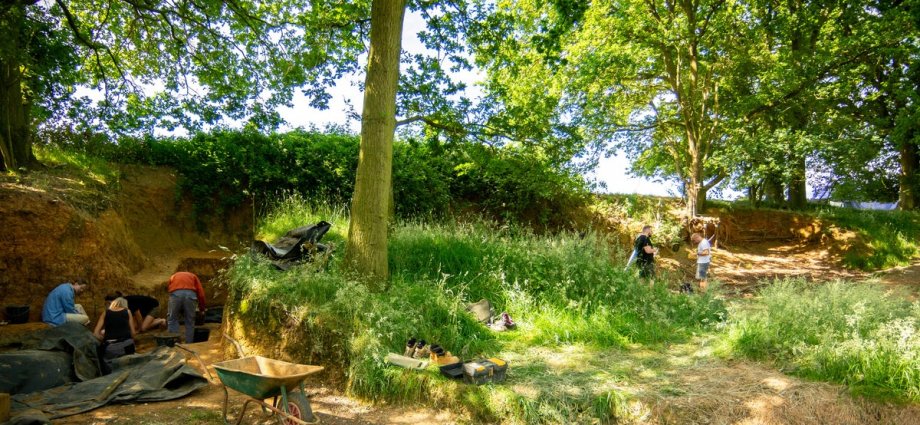
Groundbreaking research has revealed the earliest known evidence of human fire-making in the UK, dating back over 400,000 years.
This discovery, at a disused clay pit near Barnham, Suffolk, pushes the timeline back 350,000 years from the previous record of 50,000 years ago in northern France.
The Barnham site, between Thetford and Bury St Edmunds, yielded fire-cracked flint hand axes and heated sediments.
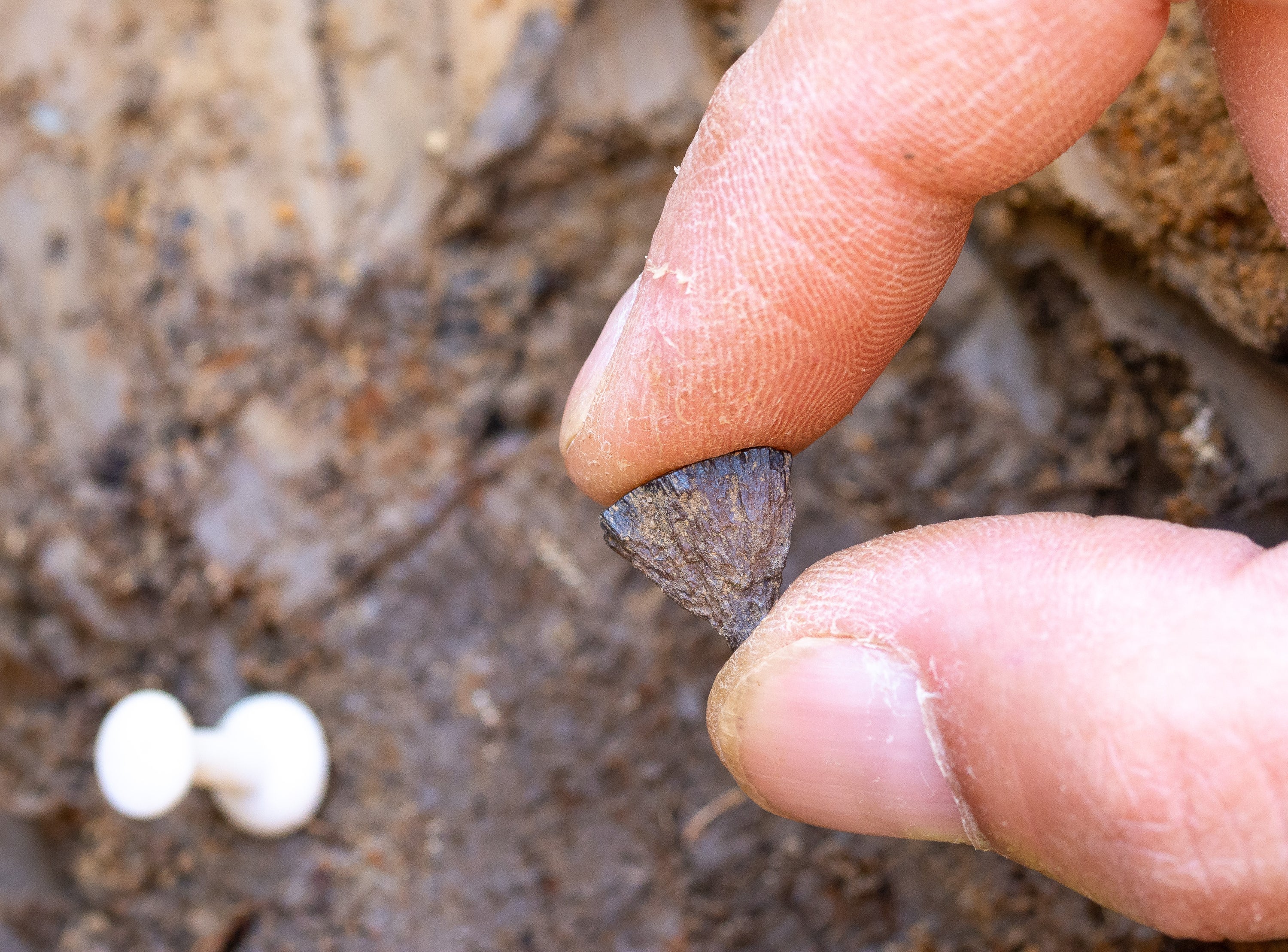
Crucially, two fragments of iron pyrite – a spark-striking mineral – were also found.
Geological studies confirm pyrite’s local rarity, suggesting deliberate transport for fire production.
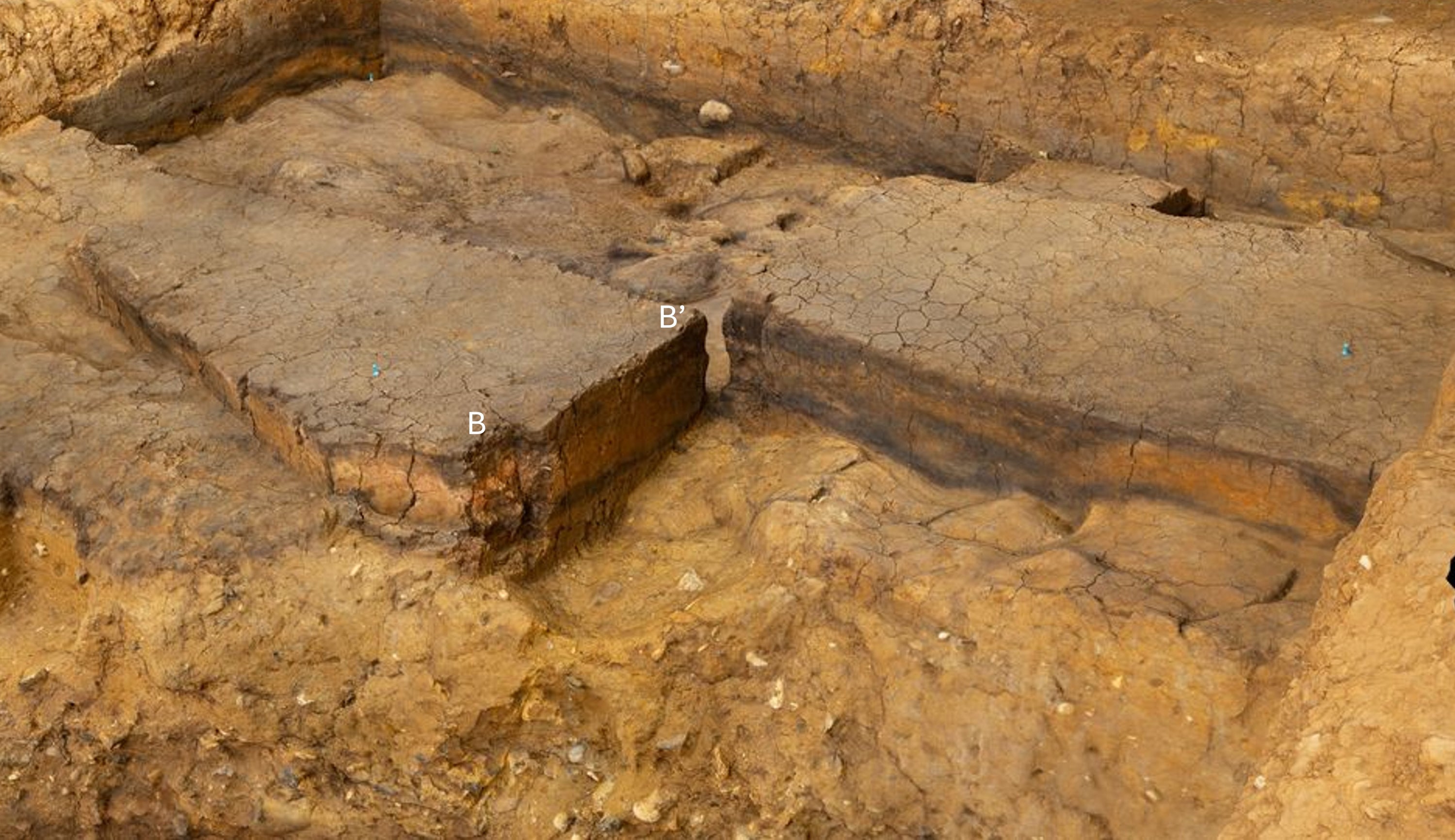
It took four years for a team, led by researchers at the British Museum, to demonstrate that the heated clay was not caused by wildfire.
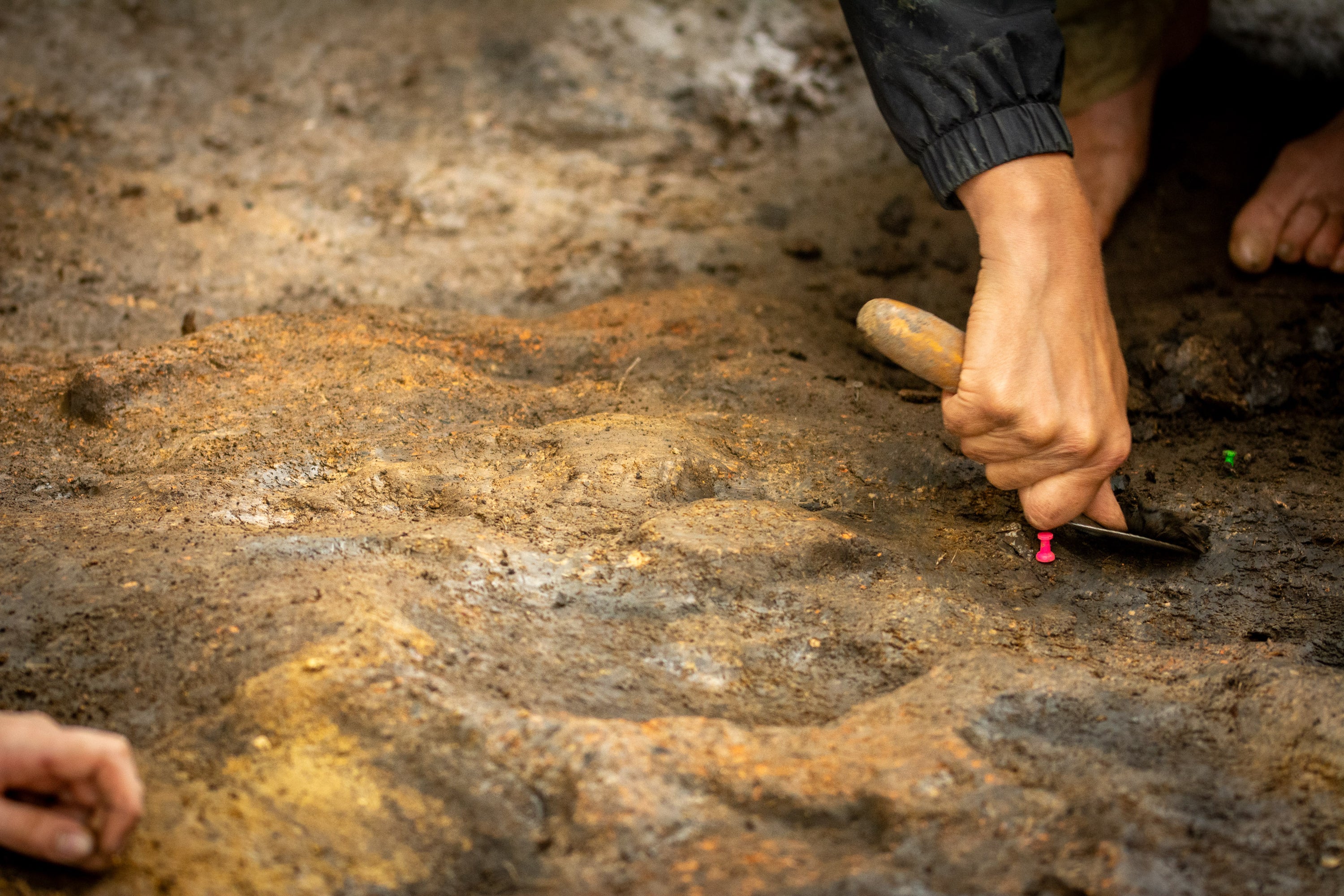
Geochemical tests indicated repeated fire use at the same site, more typical of human use than wildfires.
The controlled use of fire had “profound effects on human evolution”, say the study’s authors, increasing survival in harsh environments through warmth and protection from predators.
Other benefits included cooking – widening the range of foods that could be safely eaten – and the creation of lit spaces that became focal points for social interaction.
Dr Rob Davis, Project Curator: Pathways to Ancient Britain at the British Museum, said the hearth area was about “half a metre in diameter, sort of (a) small campfire”.
Professor Chris Stringer, of the Natural History Museum, said it is thought that the fires at Barnham were being made by early neanderthal people, but their identity is not directly known.
He said that “around this time period brain size was increasing to its present levels”.
“There’s no doubt that our brains are energetically expensive,” said Prof Stringer.
“They use about 20 per cent of our body energy so having the use of fire, having the ability to make fire, is going to help release nutrition from the food which will help to fuel that brain, help to run it and indeed allow the evolution of a bigger brain.”
He continued: “Yes, there’s a gap of maybe 350,000 (years) until the next best evidence, but of course we’re not saying there wasn’t a use of fire earlier on.
“And of course we’re not saying fire was … invented at Barnham.
“We assume that the people who made the fire at Barnham brought the knowledge with them from continental Europe.
“There was a land bridge there.
“There had been a major cold stage about 450,000 years ago which had probably wiped out everyone in Britain and then Britain had to be repopulated all over again.”
He said that having the use of fire would have helped people “moving to places where the winters are going to be colder”.
“Having the use of fire and the ability to make it, to have that insurance, if you like, against the bad times, when you’ve got fire you can keep warm, you can keep wild animals away, you get more nutrition from your food.
“I think all of these things fed into a feedback where the brain is going to get larger, people are going to be sitting around the fires sharing information, having extra time beyond pure daylight to make things, to teach things, to communicate with each other, to tell stories maybe.
“It may have even fuelled the development of language.
“I think having this information that it was there 400,000 years ago really means we’ve got a key aspect, a crucial aspect in human evolution.”
Professor Nick Ashton, Curator of Palaeolithic Collections at the British Museum, said it was the “most exciting discovery of my 40-year career”.
The paper, Earliest Evidence of Making Fire, is published in the journal N