











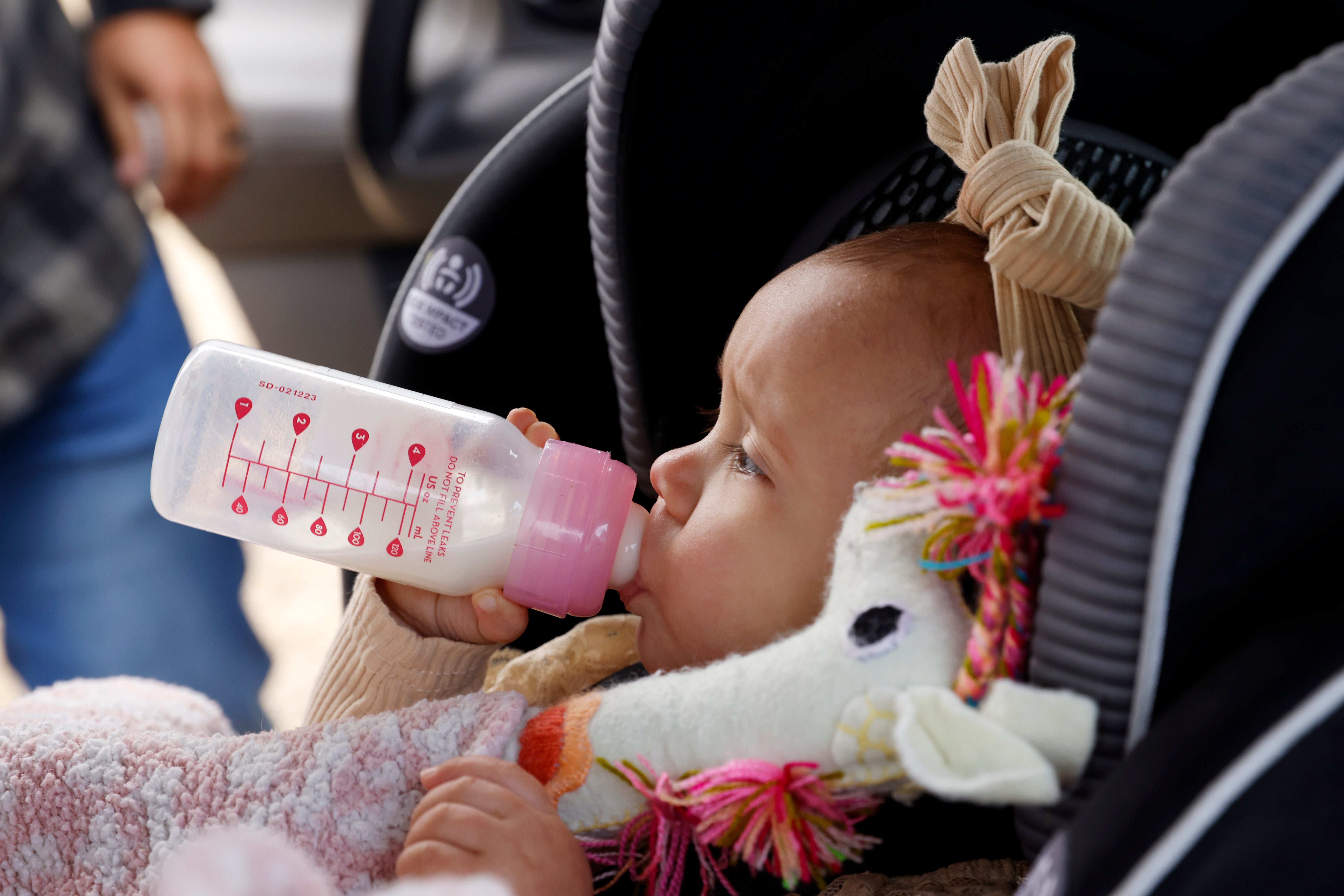
Chemicals leaching from everyday plastic objects like baby bottles could be linked to behavioural changes in young children, a new study has warned.
Scientists tracked the effects of real-world exposure to two kinds of chemicals that have become widespread in the past decade in plastics, food packaging, cosmetics and personal-care products.
Bisphenol S, widely referred to BPS, and methylparaben were themselves introduced by manufacturers as governments moved to restrict the use of another compound called bisphenol A, or BPA.
Many products are now advertised as “BPA-free”, after the chemical once used in baby bottles and food containers was linked to hormonal disruption and possible developmental effects.
The new study, published recently in The Lancet Planetary Health, analysed urine samples from more than 1,000 pregnant women across cohorts in France and Spain.
It found that higher concentrations of BPS and methylparaben during pregnancy were associated with small differences in children’s emotional and behavioural development at 18-24 months. The associations appeared to differ by sex, with the study reporting a stronger statistical link between BPS and behavioural scores in boys.
However, the authors of the latest study also emphasised that their findings showed “important potential connections” but did not prove “that behavioural problems are a direct result of prenatal exposure”, according to a press release.
Independent experts warned the new study should be interpreted with caution.
Last year, another study published in Nature reported that pregnant women who later gave birth to boys with autism had higher levels of BPA in their bodies. The authors stressed that this did not prove BPA played a role, only that the link needed further investigation.
The team also explored whether changes in stress hormones could help explain the pattern, but found no clear biological pathway. They said more work was needed to understand how – or whether – these chemicals could influence early development.
Oliver Jones, professor of chemistry at RMIT University in Melbourne, said the findings should not be taken as evidence of harm.
“The authors have only found an association between two factors. This is not the same as saying one thing caused the other,” he said, adding that urine levels showed the body was excreting the chemicals which “means they can’t be causing an effect” at that point.
He noted that a small number of urine samples were collected per participant during pregnancy which was “not an adequate sample size” to capture full exposure over nine months. Many other influences, including sleep, diet and postnatal environment, were not measured, he added.
Dr Ria Devereux, environmental research fellow at the University of East London, said behaviour in early childhood was shaped by “multiple factors, including home environment, socioeconomic conditions and genetics”, many of which weren’t captured.
She added that evidence on BPS remained mixed, with some studies reporting a link and others finding none.
Despite such uncertainty, both experts said the work contributed to growing scrutiny of BPA alternatives. BPS is already used in plastics and thermal paper in the UK, while methylparaben is permitted in cosmetics and pharmaceuticals.
Previous concerns about BPA’s hormonal activity prompted bans in baby bottles and restrictions in food packaging across the EU and several other jurisdictions.
The study’s authors say further investigation is needed before any regulatory recommendations can be made, but argue that exposure during pregnancy, when foetal development is most sensitive, warrants closer attention.