










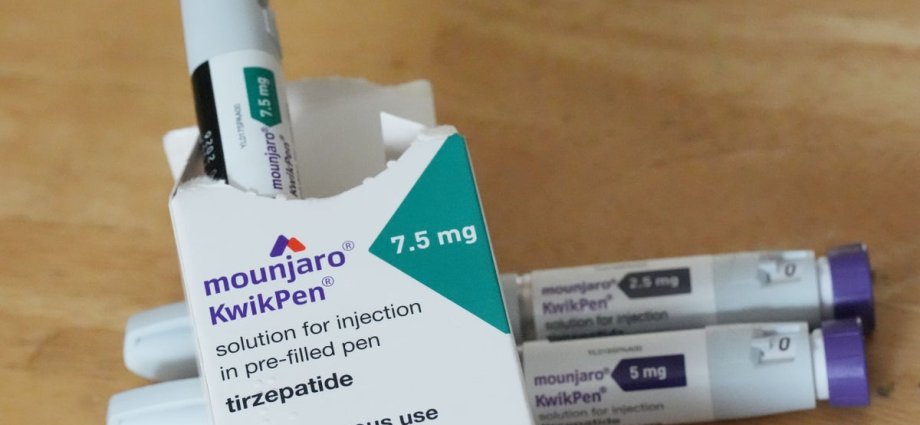
Weight-loss jabs could have a hidden benefit for a particular group of breast cancer patients, a new study has found.
Scientists studying the “overlooked” hormone estrone, which is produced in fat tissue, have said it could be linked to an increased risk of death from breast cancer in postmenopausal women with obesity.
The research from Dr Joyce Slingerland at Georgetown University suggests that these women may benefit from GLP-1 medications, a group of popular weight-loss drugs including Ozempic and Mounjaro.
Dr Slingerland analysed data on women diagnosed with estrogen receptor-positive (ER+) breast cancer – the most common and deadly form of the disease in women after menopause.

She found that in post-menopausal women with obesity, the major driver of breast cancer is estrone. This is different to premenopausal women, whose primary form of estrogen is 17β-estradiol.
Estrone is produced in fat tissue, and can join with certain proteins to activate genes that trigger inflammation.
Dr Slingerland’s research has shown high estrone levels propel intense inflammatory activity, setting off a cascade that causes precancerous changes and activates cancer-fuelling genes.
There’s also evidence that estrone and the inflammation it causes can harm the immune system’s ability to detect and kill cancer cells, she said.
She said she now believes studies analysing GLP-1 drugs in women with ER-positive breast cancer who have obesity are a “logical and compelling next step”.
“The GLP-1 drugs have revolutionised weight loss,” Dr Slingerland said. “Because of estrone’s powerful inflammatory effects in fat, there’s real potential that, by inducing weight loss, GLP-1 drugs can pump the brakes on estrone’s cancer-fuelling behaviour.”

Dr Kotryna Temcinaite, senior research and impact communications lead at charity Breast Cancer Now said it is estimated that in the UK around 8 per cent of breast cancers are linked to being overweight or obese.
“Here, researchers highlight that the different forms of the hormone oestrogen present before and after menopause could be behind this,” she told The Independent. “Oestrogen is what the most common type of breast cancer, called ER-positive, relies on to grow. And people living with obesity have much higher oestrogen levels.
“We now need to better understand how different weight-loss approaches – including weight-loss medications, physical activity and dietary changes – could help to reduce oestrogen levels. Either used alongside breast cancer treatment or to prevent the disease.
“When it comes to weight-loss medications, we still need more research to understand how they could benefit people with breast cancer – whether they have a long-lasting effect and if they can reduce breast cancer deaths.”