










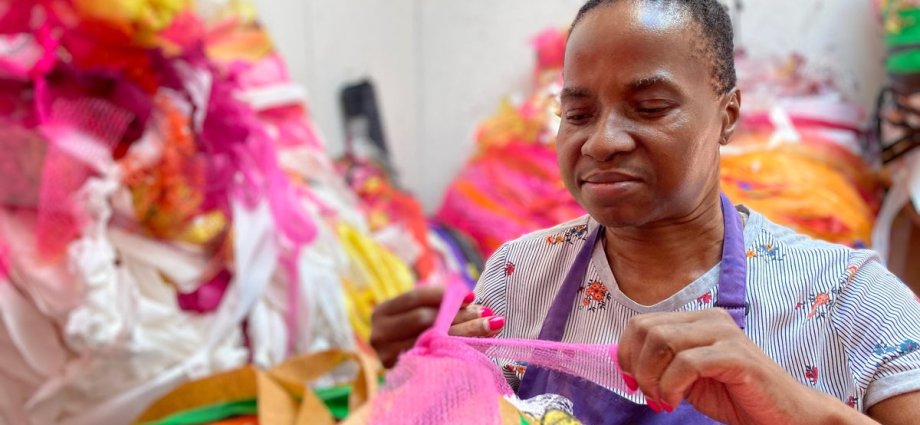
Nnena Kalu has won the 2025 Turner Prize for her colourful cocoon-like sculptures made of VHS cassette tape and found fabric.
The 59-year-old artist, who is autistic with limited verbal communication, is the first learning-disabled artist to be nominated for the prestigious award.
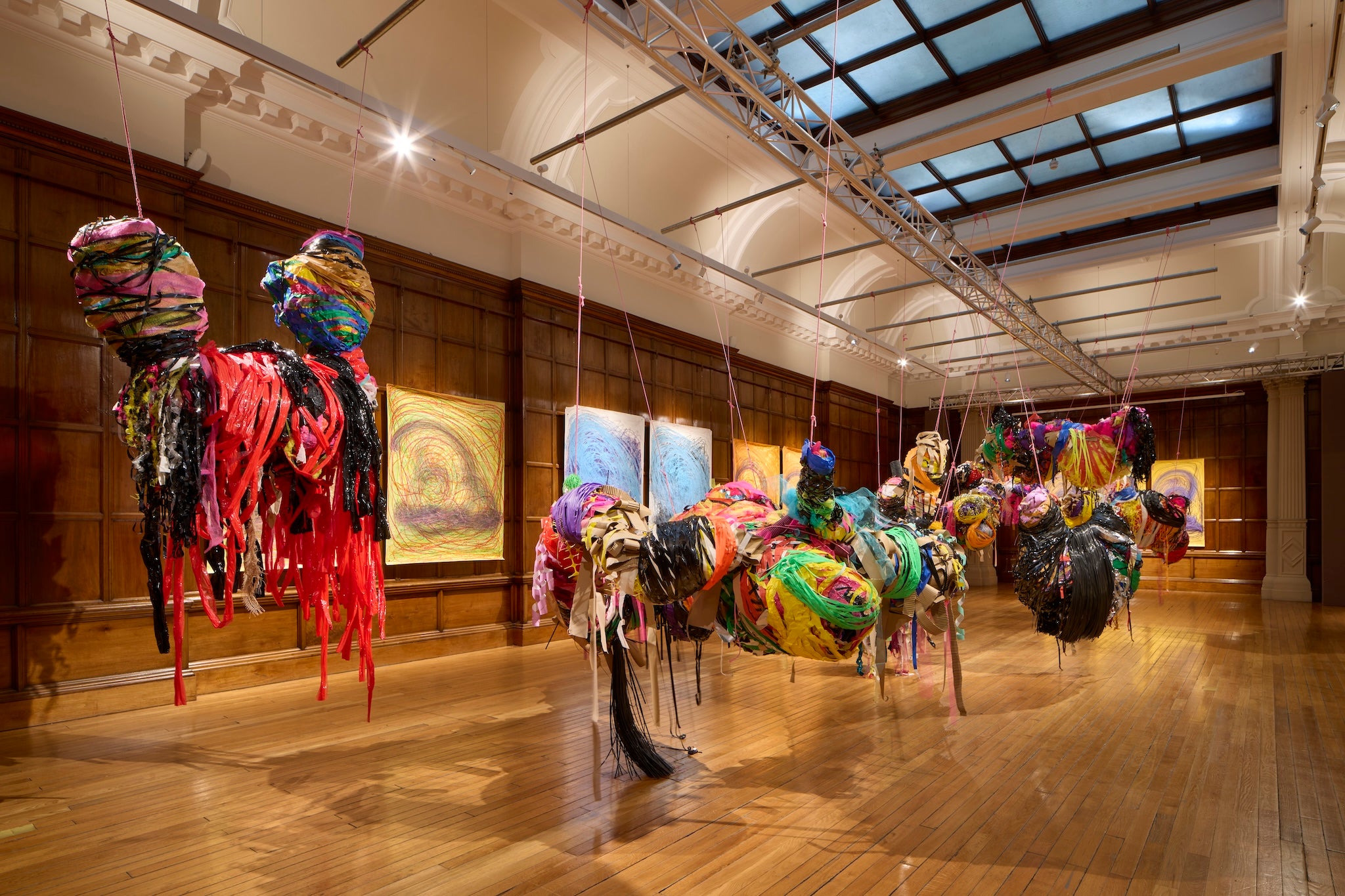
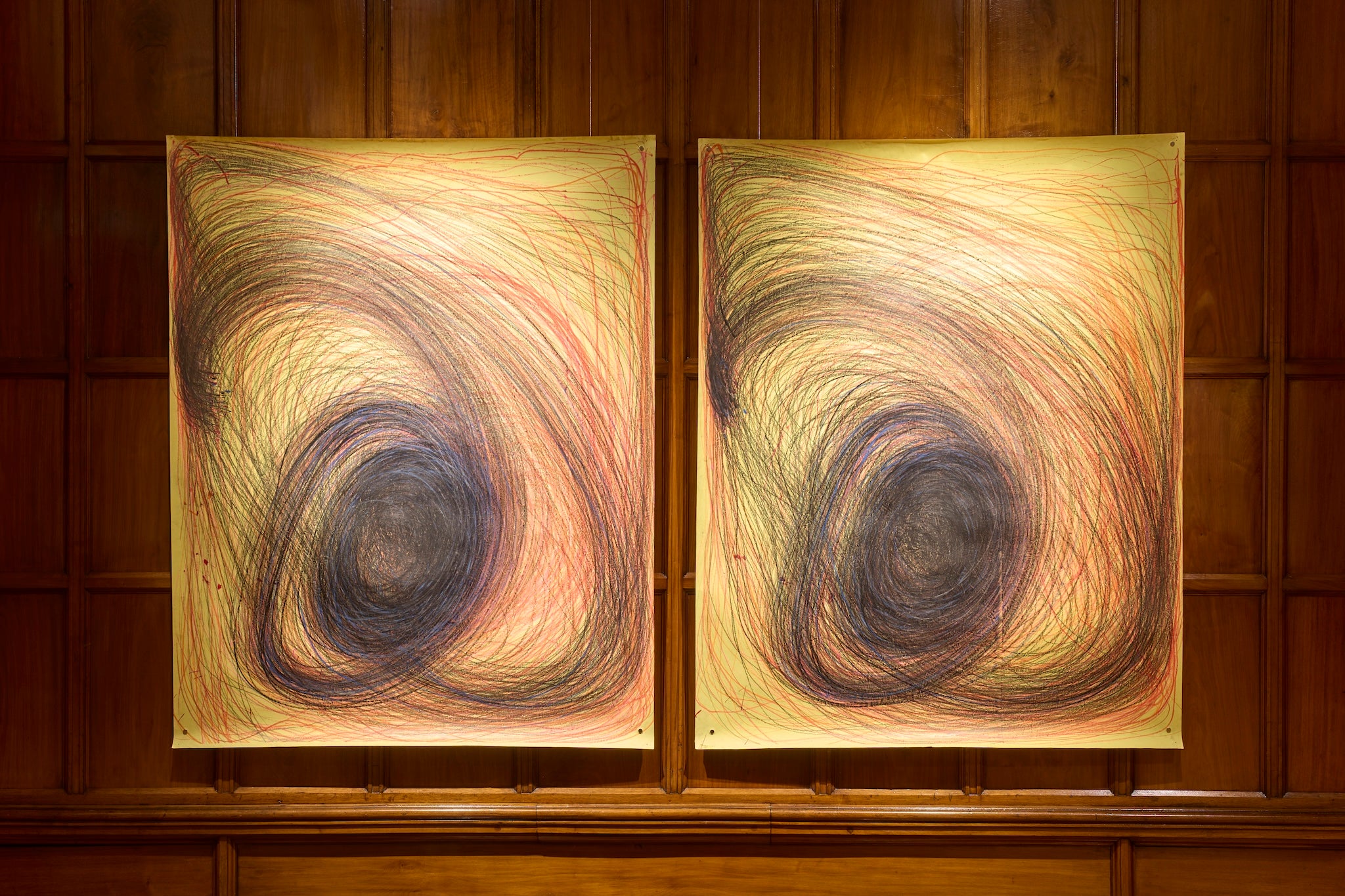
She received the nod for the inclusion of Drawing 21 in the group exhibition Conservation at the Walker Art Gallery in Liverpool, as well as her works Hanging Sculpture 1-10.
Kalu’s suspended sculptures are created by winding vibrant recycled materials, such as cloth, paper, and card, around lengths of flexible ducting tape. This creates “a sense of joyous uplift”, wrote The Independent’s art critic Mark Hudson in a review of the Turner Prize shortlisted artists this year.
The artist beat out her fellow nominees, including Mohammed Sami, whose large-scale paintings meditating on war and Iraq had made him the favourite to win.
Magician Steven Frayne, formerly known as Dynamo, presented the prize to Kalu at a ceremony held in Bradford on Tuesday evening (9 December). She will receive £25,000.
Chaired by the director of Tate Britain Alex Farquharson, the jury commended Kalu’s bold and compelling work, praising her lively translation of expressive gesture into sculpture and drawing. They also noted her finesse of scale, composition and colour.
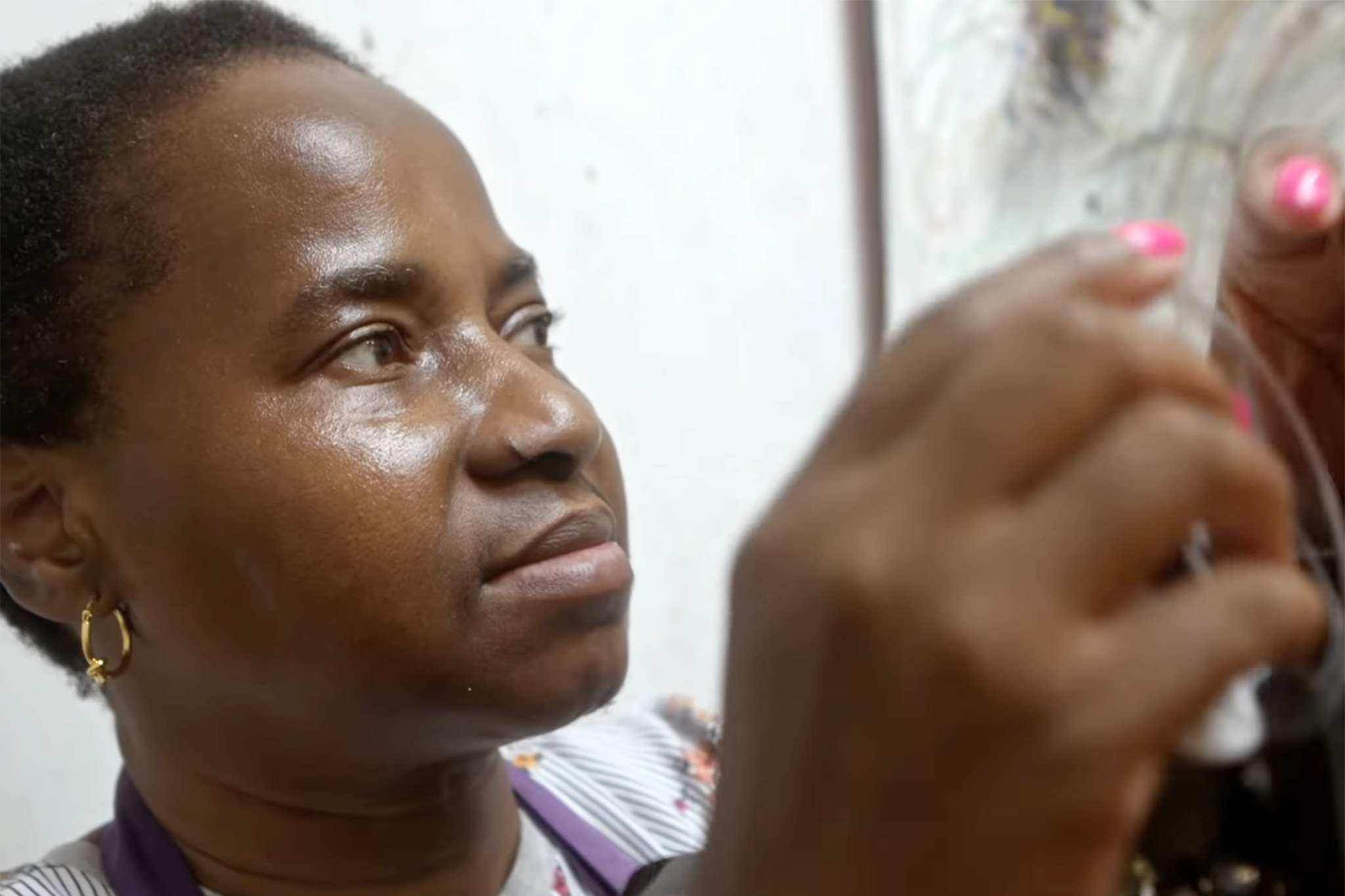
Born in Glasgow to Nigerian parents, Kalu moved to London at a young age. She still lives in the city in supported care, according to a recent interview in The Guardian.
Kalu works closely with her longtime studio manager and artistic facilitator, Charlotte Hollinshead, who leads the team that has been helping to support and nurture her creative endeavours since 1999.
“The nomination is phenomenal,” Hollinshead told The Guardian in May. “It’s seismic. Someone said to me the other day, ‘It’s like someone’s just thrown a bomb into the Turner prize’ – and it is like that. A good bomb.”
Alongside her sculptural work, Kalu also creates large-scale abstract drawings made with similar vigorous and rhythmic lines.
Established in 1984, the Turner Prize is Britain’s best-known art prize. It is awarded annually to an artist born or working in the UK for work completed over the previous year.
This year, Kalu beat out Baghdad-born painter Sami, Korean-Canadian artist Zadie Xa, and photographer Rene Matić, who at 28 is the second-youngest artist ever to be shortlisted for the Turner. The other nominees will receive £10,000 each.
Sami, 41, was considered the favourite to win after receiving the nod for his exhibition After the Storm: Mohammed Sami at Blenheim Palace. It comprised 14 paintings that respond to Winston Churchill’s birthplace and contains “hints and references to conflict in Iraq”.

The work of Korean-Canadian artist Xa, 42, falls into a mystical trend in contemporary art. “Merging land and seascape in hallucinatory compositions rooted in the shamanic traditions of her Korean heritage,” wrote Mark Hudson.
Matić was the only photographer to be shortlisted for the prize; their photographs of political demonstrations and queer subculture were influenced by their experience growing up queer and mixed-race in Peterborough.
In a video that accompanies their art, Matić – who has English, Irish and Saint Lucian heritage – describes Blackness and whiteness as being “at war” within their body.
On the Turner Prize 2025 jury alongside Farquharson were independent curator Andrew Bonacina, director of Liverpool Biennial Sam Lackey, associate curator of modern and contemporary projects at the National Gallery Priyesh Mistry, and Habda Rashid, who is the senior curator of modern and contemporary art at Fitzwilliam Museum.
Kalu joins a revered list of winners including sculptor Sir Anish Kapoor (1991), artist Damien Hirst (1995), filmmaker Sir Steve McQueen (1999), and Scottish artist Jasleen Kaur, whose doily-clad car helped to clinch her win last year.
A group show of the 2025 shortlisted artists work is running at Cartwright Hall Art Gallery in Bradford until 22 February 2026.