










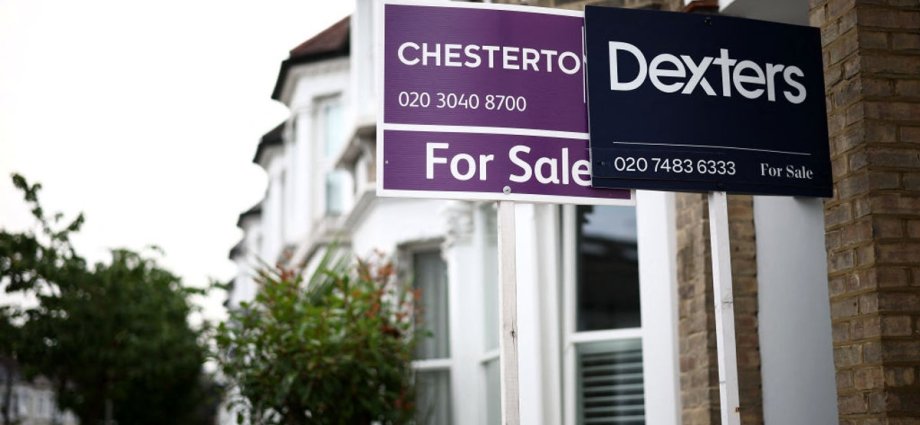
Homeowners and prospective buyers are facing a mortgage boost as lenders collectively battle for business and drop rates as low as 3.51 per cent.
Those on fixed-term five-year deals taken out during the post-lockdown buying spree in 2020 will have been watching with concern as they would be due to renew at the end of this year. At the time, they would have been on mortgage products with extremely low interest rates attached – but across 2022 and 2023, rates rose rapidly to combat inflation.
While both have been on the downward march since then, rates remain higher. But with Budget uncertainty leaving people unsure whether they should sell up in the latter part of the year, the property market has stalled – and lenders have taken measures into their own hands.
A succession of mortgage product drops in the lead-up to the Budget and in the weeks since has seen the likes of Barclays, Santander, NatWest, Nationwide and others all lower their best-available rates, with the expectation that the Bank of England’s vote next week will see the base rate lowered by the Monetary Policy Committee (MPC).
Mortgage deals are based on swap rates rather than directly from the base rate – the Bank of England’s interest rate – and the expectation is that some deals could continue to drop as the battle for customers heats up.
It is notable, then, that the average two- and five-year fixed deals are now both below 5 per cent, their lowest rate since September 2022, according to Moneyfacts.
Barclays will see some remortgage deals go as low as 3.7 per cent from Tuesday, NatWest has a 3.62 per cent offering, and Santander has one product going as low as 3.51 per cent.
Nationwide’s lowest rate, meanwhile, appeared last week at 3.58 per cent – the first time in more than three years that the building society – the second-largest mortgage provider in the UK – has offered a fixed mortgage rate below the 3.6 per cent mark.
It should be noted that the very best headline deals are usually reserved for around the 60 per cent loan-to-value (LTV) arrangements, and can often have fees attached to them, so they are not always the best for everyone’s particular circumstance.

Get a free fractional share worth up to £100.
Capital at risk.
Terms and conditions apply.
ADVERTISEMENT
Get a free fractional share worth up to £100.
Capital at risk.
Terms and conditions apply.
ADVERTISEMENT
But they still indicate the lowering across the board of many products with different lenders, which is better for consumers as more choice in their price and loan range becomes likely.
Property prices across the UK have only marginally risen month to month of late, but digging deeper into the data, Jonathan Hopper of Garrington Property Finders pointed out the regional differences made for a “K-shaped” development: “Prices in the north of England, Scotland and Northern Ireland ratcheted up while they fell in London and surrounding counties,” he said.
“The slide in London prices accelerated. Across the capital, they fell by 1 per cent in the year to November, but in prime areas the falls have been even sharper.”
The expectation is that this might push mid-market and first-time buyers into action in the new year, as prices and mortgage deals both become more attractive.
“In a year when Budget speculation kept a lid on demand for most of the final six months, steady mortgage rates underpinned housing market activity. We expect rates to keep drifting lower in 2026 and sub-4 per cent mortgages will become available across a wider range of loan-to-value deals,” said Tom Bill, head of UK residential research at Knight Frank.
“The tougher financial landscape for buyers after the Budget, including the income tax threshold freeze, will increasingly keep demand in check.”
Shaun Sturgess, director at Sturgess Mortgage Solutions, added: “It feels like lenders are handing borrowers an early Christmas gift, and you can really sense the battle to be the most competitive is heating up.
“After a challenging 2025, this momentum is exactly what buyers and homeowners have been hoping for. Any reduction on core two-year products makes a real difference to affordability, and it brings a renewed sense of optimism as we move into the new year.”