









Humanity’s first kiss dates back 21 million years and our ape ancestors may have locked lips with Neanderthals, a study has found.
Although it was known that Homo sapiens and Neanderthals interbred, researchers have now discovered these interactions may have gone beyond pure animal instincts and been signs of affection.
Kissing is common in a variety of animals, but for scientists it creates an evolutionary puzzle. That’s because kissing can spread disease and offer no obvious reproductive or survival advantage.
In the study, led by the University of Oxford, researchers carried out the first attempt to reconstruct the evolutionary history of kissing looking at the primate family tree.
Results, published in the journal Evolution and Human Behaviour, suggested kissing is an ancient trait which evolved between 21 million and 16 million years ago and is still present in most of the large apes.

“This is the first time anyone has taken a broad evolutionary lens to examine kissing, Dr Matilda Brindle, lead author and evolutionary biologist at Oxford’s Department of Biology, said. “Our findings add to a growing body of work highlighting the remarkable diversity of sexual behaviours exhibited by our primate cousins.”
Both Homo sapiens and Neanderthals are thought to have lived in Europe at the same time for between 2,600 and 5,400 years, until the extinction of the last Neanderthals about 40,000 years ago.
Previous studies have indicated that modern humans shared some of the same oral microbes as Neanderthals, suggesting saliva was transferred between the species. This may have been through sharing food or chewing it to soften it for children.
But this latest study suggests humans and Neanderthals kissed one another, researchers said.
For the study, researchers defined kissing as non-aggressive, mouth-to-mouth contact that did not involve food transfer.

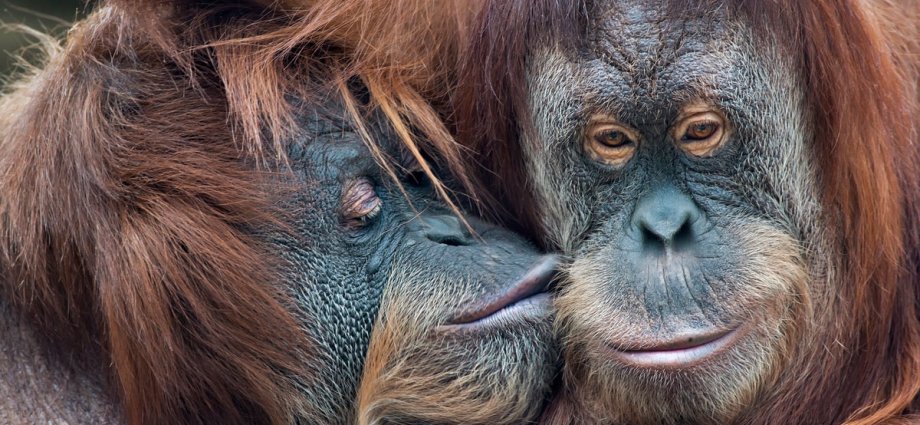
Monkeys and apes that evolved in Europe, Asia, and Africa including chimpanzees, bonobos, and orangutang were all included in the study – all of which have been observed kissing.
Kissing was treated as an evolutionary trait researchers mapped this to the family tree of primates and ran a complex model to estimate the probability that different extinct ancestors also engaged in kissing.
The model was run 10 million times to give accurate estimates.
Professor Stuart West, co-author and professor of evolutionary biology at Oxford said: “By integrating evolutionary biology with behavioural data, we’re able to make informed inferences about traits that don’t fossilise – like kissing. This lets us study social behaviour in both modern and extinct species.”
It is suggested that kissing may have originated from grooming habits or from mothers feeding their young.
But study authors explained that although the study does “help explain how kissing evolved, this should not be conflated with why animals kiss. This tells us nothing about the mechanism or function of kissing.”