










Romantic kissing likely evolved for the first time in a common ancestor of humans and other large apes about 21 million years ago, scientists revealed in a new study.
Several animals have so far been spotted engaging in kissing-like behaviour, including chimpanzees, gorillas, and even dogs, cats, and dolphins.
However, the behaviour represents a puzzle from an evolutionary perspective as it also carries risks, such as disease transmission, while offering no particular survival or reproductive advantage.
While kissing has been widely studied for its cultural and emotional significance in humans, its evolutionary significance remains less understood, University of Oxford researchers say.
Now, for the first time, scientists have reconstructed the evolutionary history of kissing based on the primate family tree.
The findings suggest kissing became a common trait in prehistoric large apes, a human ancestor species that lived about 21.5–16.9 million years ago.
It then became retained over the course of evolution, persisting in most of the large apes, including gorillas and humans, according to the study published in the journal Evolution and Human Behaviour.

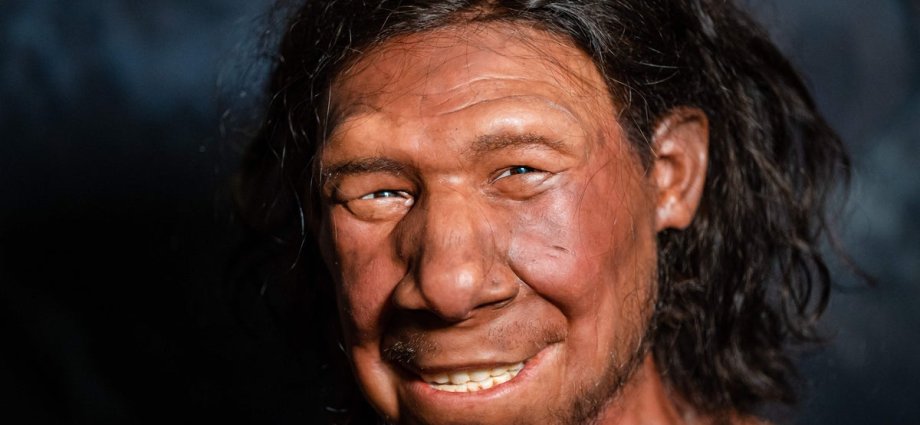
The research suggests our cousins Neanderthals, also engaged in kissing.
Oral bacteria studies of early humans and Neanderthals also point to saliva transfer between the two species, strongly hinting that the two also kissed one another.
“This is the first time anyone has taken a broad evolutionary lens to examine kissing,” said evolutionary biologist Matilda Brindle from the University of Oxford.
“Our findings add to a growing body of work highlighting the remarkable diversity of sexual behaviours exhibited by our primate cousins,” said Dr Brindle, lead author of the study.
In the study, scientists assessed different species to define a kiss as non-aggressive, mouth-to-mouth contact that did not involve food transfer.
They then gathered data on which modern primate species have been observed kissing, focusing on monkeys and apes that evolved in Africa, Europe and Asia, including chimpanzees, bonobos, and orangutans.
Researchers then constructed and mapped the “trait” to an evolutionary family tree of primates to predict when it likely evolved.
Scientists ran computer simulations to estimate the probability that different ancestors on the branches also engaged in kissing.
They found that it first likely emerged about 21.5 million years ago in a large ape species.
“While kissing may seem like an ordinary or universal behaviour, it is only documented in 46 per cent of human cultures,” said Catherine Talbot, another author of the study.
“The social norms and context vary widely across societies, raising the question of whether kissing is an evolved behaviour or cultural invention. This is the first step in addressing that question,” Dr Talbot said.