










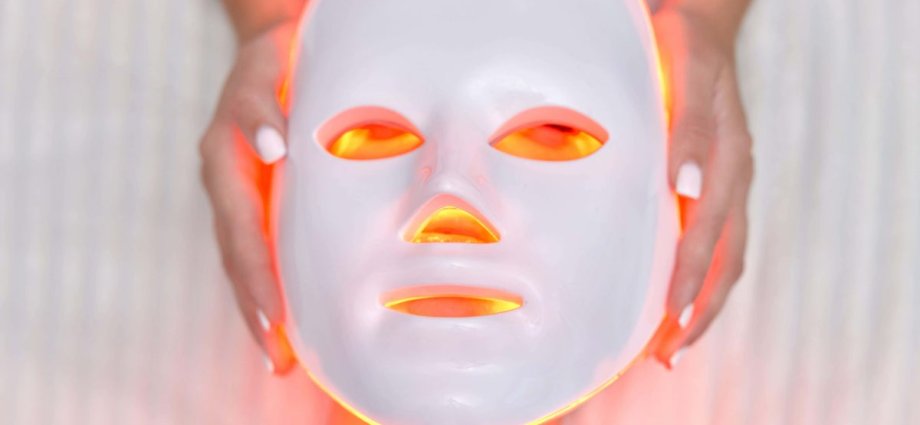
LED technology has been used by dermatologists for decades to treat an array of skin issues from acne to sun damage.
Sellers of the at-home beauty devices, which can cost up to £400, claim LED masks can stimulate skin cells, improving skin texture, reducing wrinkles and even helping acne.
Although it may sound appealing to have a device that can supercharge your skincare routine, dermatologists stress that the unregulated masks are not a miracle cure for all skin conditions and only deliver a “modest” reduction in wrinkles.
Adverts claiming the masks can improve acne and rosacea were banned by advertising watchdogs last week for making unauthorised medical claims, stressing the importance of not “blurring the line between cosmetic benefits and medicinal claims”.
Not only is there little clinical evidence to support these health claims, but any devices must be registered with the Medicines and Healthcare products Regulatory Agency (MHRA).
“There have been all sorts of claims from treating acne, rosacea, improving skin ageing, fighting inflammation, tackling redness and improving pigmentation. All of these things have somehow ended up being lumped together and whatever your skin concern is, these masks offer some sort of solution,” Harley Street dermatologist Dr Justine Kluk told The Independent.

LED face masks work by causing the skin to absorb light energy, usually in the infrared range, which triggers cellular changes in a process called photobiomodulation (PBM), promoting the production of collagen and elastin, according to consultant dermatologist and British Skin Foundation spokesperson, Dr Jonathan Kentley.
“It has been used in dermatology for a really long time – particularly red light, which is often a component of how we would treat certain types of sun damage, pre-cancerous skin changes, and even some superficial skin cancers,” Dr Kluk said.
But dermatologists are divided over whether at-home masks can deliver the same results as medical-grade devices used in clinics.
Dr Kentley explained LED therapy in clinics is “more powerful” and “delivered to the skin more evenly”, suggesting it is more effective than at home devices.
“We’re assuming that it does the same thing that the stronger in-hospital or in-clinic devices do, but people haven’t really done head-to-heads between them,” Dr Kluk added.
She explained that although LED is used in dermatology clinics to treat conditions such as acne it’s not used as much as topical and oral treatments, meaning there is less published data about LED.
“There is even less data available for at-home LED masks for treating these skin conditions and out of the handful of studies they are published by the companies that sell them, so there is bias in interpreting the results – they probably wouldn’t publish data that showed they didn’t work,” Dr Kluk said.
Although she appreciates that buying a mask may be a quicker solution than getting a dermatology referral, she stresses that the longer someone waits to get help for their acne the more likely they are to get scarring.
Dr Kluk said: “It does make me upset that people would believe in these devices, which would mean that they delay getting treatment. We know the risk of acne scarring depends on the severity of the acne, but also the duration of the acne. So the longer someone spends trying things that don’t work, the higher the risk of scarring.”
But it’s not just skin conditions, dermatologists warn there is also not enough evidence to claim the masks can reduce wrinkles.
“There is evidence that these at-home devices, if used every day consistently for months and months, might deliver a modest improvement in skin quality,” Dr Kluk said.
Dr Kentley explained that when red light is applied to the skin regularly it can help with boosting collagen and elastin and in some cases it has been shown to improve the skin’s appearance. But he warned “there is insufficient evidence to claim they reduce wrinkles” and to get any benefit the mask would need to be used regularly for 10 to 15 minutes a day.
“The masks are quite expensive and really it isn’t clear how much benefit you will actually gain from them,” Dr Kentley said.
“They are also quite unregulated and not all masks are created equal: some companies have gone to great efforts in research and development of their masks, whilst others are mass produced with little thought,” he added.