










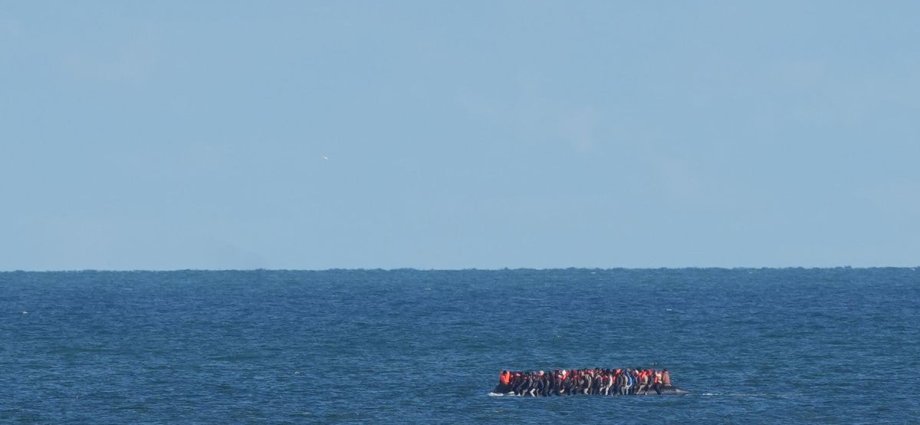
Hundreds of asylum seekers are set to be moved onto military barracks as ministers scramble to find a way to end the use of hotels to house migrants.
The Home Office has confirmed that Crowborough Training Camp in East Sussex and Cameron Barracks in Inverness will be temporarily used to house a total of around 900 men under the plans.
Small boat migrants will start being housed in the accommodation by the end of next month. Officials are also working with the Ministry of Defence to identify other disused sites that can be used in the coming months in a bid to get a grip on the asylum accommodation crisis.
There are also plans to build pop-up modular units, which have previously been used to tackle prison overcrowding, on some of the sites.
The plans comes as Labour ramps up its bid to move tens of thousands of migrants out of hotels after huge controversy surrounding their use.
On Monday, a parliamentary committee branded the use of asylum hotels as “failed, chaotic and expensive” and accused the Home Office of squandering billions of pounds as a result of incompetence.

But the committee also said that the use of military sites is likely to cost more than hotels and would also post safety and legal risks. Any plans are also likely to face significant local opposition.
A Home Office spokesperson said: “We are furious at the level of illegal migrants and asylum hotels.
“This government will close every asylum hotel. Work is well under way, with more suitable sites being brought forward to ease pressure on communities and cut asylum costs.”
Labour has pledged to end the use of hotels by 2029, but the prime minister has reportedly told ministers in private that he wants to end the practice within a year. Sir Keir Starmer has said he is “frustrated and angry” about the “mess” inherited by the Labour when it comes to asylum.
Defence minister Luke Pollard told Sky News on Tuesday that ministers want to “go faster’ on closing asylum hotels and that the Ministry of Defence is “stepping up”.
He explained: “We are looking at the sites that we have available where we could house asylum seekers, allowing the Home Office to close more asylum hotels faster.
“It’s right that we step up and support our Home Office colleagues in this respect, because I don’t think anyone wants to see asylum hotels open.”
Both sites were used to accommodate Afghan families evacuated during the withdrawal from Kabul in 2021. Those families were resettled elsewhere, with that work ending earlier this year.
The Scotland site will house around 300 people, while the other site will be for around 600, it was reported.
On Monday, housing secretary Steve Reed said the government was looking at “modular” forms of building to ensure new sites can go up quickly, as part of plans to end the use of hotels “entirely”.
Pop-up cabins are already being used to expand capacity at former military base RAF Wethersfield, in Essex, which is the Home Office’s largest asylum accommodation site.
Plans had been floated to install cabins at RAF Scampton, in Lincolnshire, but this was scrapped when Labour came to power.
Building company Portakabin has also said it is open to doing a deal with the Home Office to provide emergency prefabs for asylum seekers.
As of June this year, around 32,000 asylum seekers were being housed in hotels, down from a peak of more than 56,000 in 2023 but 2,500 more than at the same point last year.
Expected costs of Home Office accommodation contracts for 2019-2029 have tripled from £4.5 billion to £15.3 billion, following what the Commons Home Affairs Committee called a “dramatic increase” in demand.
Earlier this month the number of migrants who have crossed the Channel in small boats in 2025 surpassed the total for the entire of 2024.