










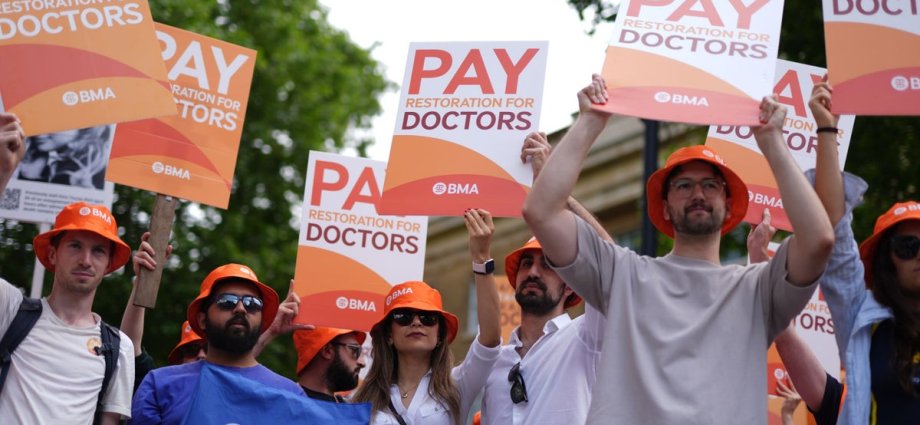
Resident doctors in England have voted in favour of strike action which could see walkouts last until January next year, the British Medical Association has announced.
It means the NHS faces huge disruption from tens of thousands of resident doctors, formerly known as junior doctors, going on strike in an attempt to secure a 29 per cent pay rise.
Despite being awarded a 5.4 per cent pay rise for this financial year, the BMA have said that wages are still around 20 per cent lower in real terms than in 2008.
The trade union said that 90 per cent of its members had voted in favour of industrial action and are demanding “pay restoration”.
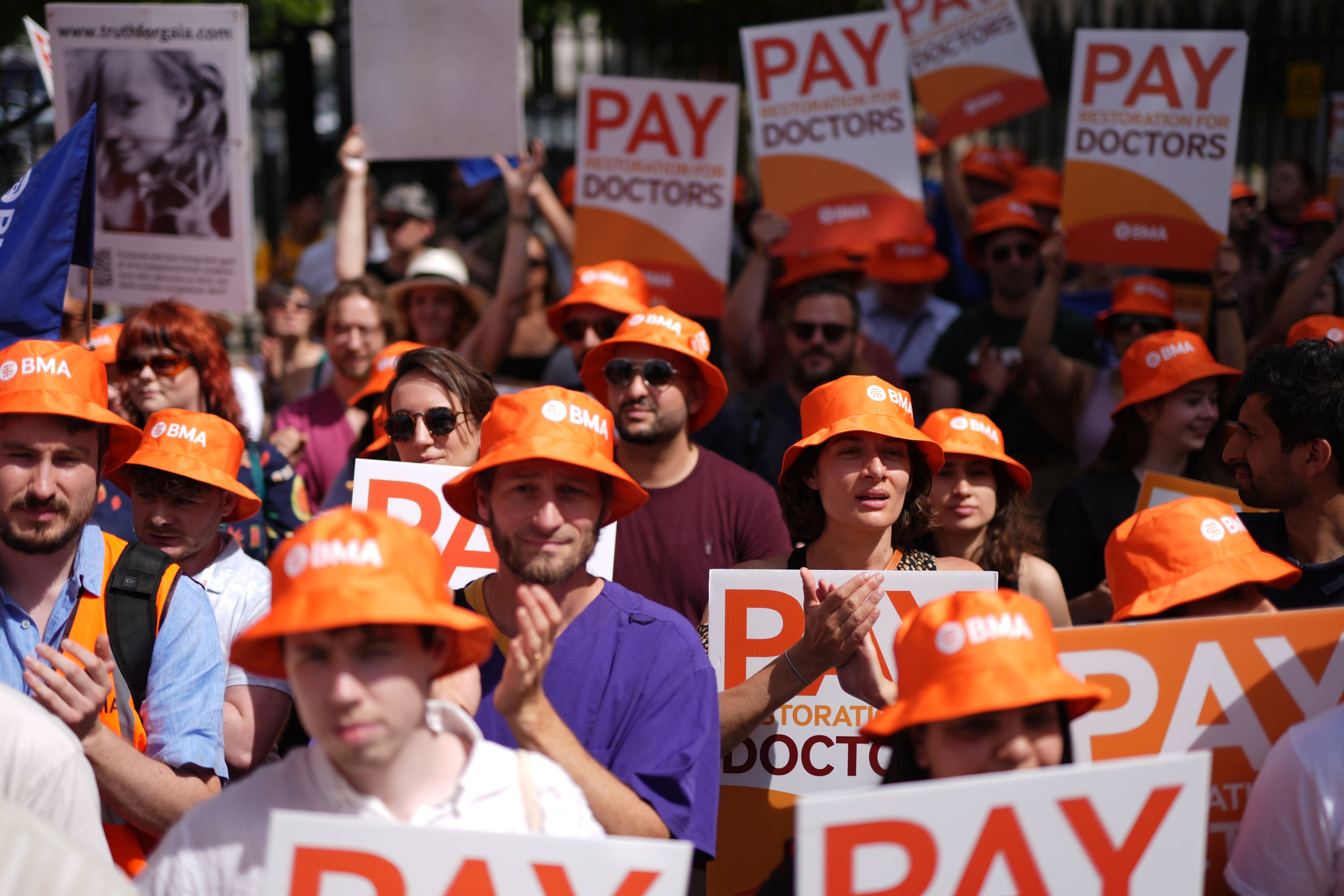
It said that there is “still time to avert strike action” as it urged the government to “come forward as soon as possible with a credible path to pay restoration”.
BMA resident doctors committee co-chairs Dr Melissa Ryan and Dr Ross Nieuwoudt said in a statement: “Doctors have spoken and spoken clearly: they won’t accept that they are worth a fifth less than they were in 2008.
“Our pay may have declined but our will to fight remains strong.
“We now find ourselves at a crucial crossroads. Last year when in opposition Mr Streeting said that the solution to strikes was to talk to resident doctors – it was as true then as it is now.
“He made a point of acting quickly to grasp the issue and negotiate a solution. Only a few weeks ago he again said he wanted to get back round the table with us.
“Now we will see if he can once again make the right decision – he needs to come forward as soon as possible with a credible path to pay restoration.”
Previous strikes by junior doctors and other NHS staff groups have seen some 1.5 million appointments, operations and procedures postponed.
The news will come as a blow to the Government after Prime Minister Sir Keir Starmer’s “plan for change” pledged that by July 2029, 92 per cent of patients will be seen within 18 weeks for routine hospital treatment such as hip and knee replacements.
The waiting list for routine hospital treatment in England is currently at its lowest level for two years, according to the latest figures, with an estimated 7.39 million treatments waiting to be carried out at the end of April.
Last month, health secretary Wes Streeting warned that the public were turning against strike action, saying: “The public supported the previous strikes against a government delivering real terms cuts to resident doctors’ pay. But patients are now opposed to strike action.
“Following the significant pay rises delivered over the past ten months, they can see that this government is committed to a fair deal for NHS staff. Nor do patients want to see the green shoots of recovery choked off by strike action.”
In September, BMA members voted to accept a government pay deal worth 22.3% on average over two years.
And the 2025/26 pay deal saw resident doctors given a 4% uplift plus £750 “on a consolidated basis” – working out as an average pay rise of 5.4 per cent.
The BMA call for a 29.2 per cent uplift is based on Retail Prices Index (RPI) inflation, the measure of average changes in the price of goods and services used by most households.
There are around 77,000 resident doctors in England who work in various settings from GP surgeries to hospitals. Resident doctor is a catchall term for all doctors in training ranging from graduates to medics with a decade of experience.
Resident doctor members of the BMA have taken industrial action 11 times since 2022.
The Department of Health and Social Care has been approached for comment.
More follows on this breaking news story